Episode #26
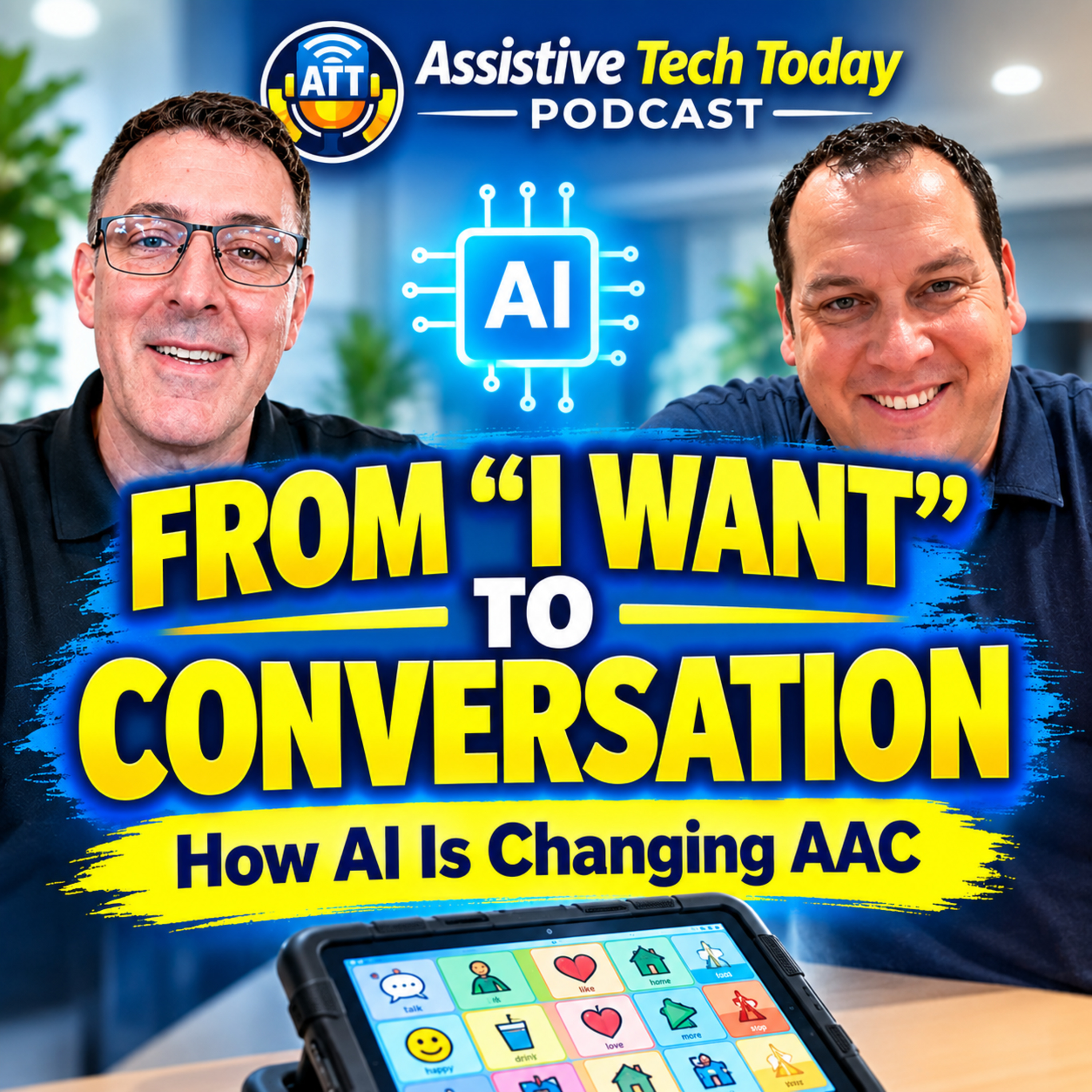
Ep. 26 From “I Want” to Real Conversation: How AI Is Changing AAC | Shay Cohen 9-10-26
In Episode 26 of the Assistive Tech Today Podcast, I sit down with Shay Cohen, co-founder of Verbaly, to talk about an innovative approach to AAC that puts conversation—not just sentence building—at the center of communication.Shay’s journey into assistive technology is deeply personal. His son is an AAC user, and after years of experiencing the challenges of existing AAC technology firsthand, Shay saw an opportunity to build something different. With a background in electrical engineering, product management, and technology, he combined his professional experience with his perspective as a father to create a more dynamic approach to AAC.One of the biggest challenges we discuss is how traditional AAC can sometimes become what Shay calls an “I want machine.” While requesting items and expressing basic needs is incredibly important, real communication goes far beyond that. Conversations change direction, questions come up, topics shift, and what someone needs to say depends on what is happening around them.That becomes especially important in the classroom.How can an AAC user answer a question about something that wasn't pre-programmed? How can they ask their own questions? And how can they demonstrate what they actually know?Shay explains how Verbaly uses AI and contextual information to help provide relevant vocabulary for the conversation happening in that moment—while keeping the AAC user in control. The AI isn't there to speak for the person. Instead, Shay describes it as a silent participant, helping highlight relevant communication paths while the AAC user remains the driver.This conversation is really about a bigger question:What happens when we stop designing AAC around what someone needs to request—and start designing it around what they want to say? Shay's story is a great example of how lived experience, technology, and product development can come together to create new possibilities in assistive technology. Like Comment with your thoughts Subscribe for more conversations about innovative assistive technologyLearn More about todays guest:Email: shay@verbali.ioLinkedin: https://www.linkedin.com/in/shaycohWebsite and Demo:Website: https://www.verbali.ioSchedule a demo: https://verbali.io/ScheduleVerbaliDemoDemo video 1 - How MaTalk AI is used for homework:https://www.youtube.com/shorts/5CiArYESZwkDemo video 2 - How MaTalk AI is used for a daily conversation:https://www.youtube.com/shorts/bllvNiqq3qwiOS app:MaTalk AI Forever (license app): https://apps.apple.com/il/app/matalk-ai-forever/id6756188044MaTalk AI (subscription app): https://apps.apple.com/us/app/matalk-ai/id6747360381Android app: MaTalk AI Forever (license app): https://play.google.com/store/apps/details?id=com.verbali.matalkaiforeverMaTalk AI (subscription app): https://play.google.com/store/apps/details?id=com.verbali.matalkai&hl=en_USCONNECT WITH US:• Subscribe to Assistive Tech Today: [https://www.youtube.com/@AssistiveTechTodayPodcast]• Follow Vinny Livoti on LinkedIn: [https://www.linkedin.com/in/vincent-livoti-46912767]"Please note: Many people in the neurodiverse community prefer identity‑first language and describe themselves as “Autistic,” which is also the language our guest typically uses. At the same time, there are individuals, families and professionals who grew up with or prefer using person‑first language (“person with autism”). We want to acknowledge these differences and honor the full range of perspectives within the community.""The views, thoughts, and opinions expressed in this program belong solely to the speakers and do not necessarily reflect the official policy, position, or views of any agency, company, or entity they represent."#AssistiveTechnology #AAC #AugmentativeAndAlternativeCommunication #AI #Accessibility #SpeechTherapy #SLP #SpecialEducation #AssistiveTech #AACUsers