Jun 29, 202635 minS3
From jaywalking laws, to freight trains, to city infrastructure that divides majority minority neighborhoods, Arrested Mobility has touched on the many ways that policies, politics, planning decisions, police practices...


society
Hosted by Charles T. Brown · society · EN-US
Why are Black Americans and other people of color disproportionately victims of overly aggressive police enforcement and brutality while walking, running, riding bicycles, taking public transit, or while driving? This podcast explores the ways in which people of color have had their mobility arrested.Hosted by Charles T. Brown, the founder and CEO of Equitable Cities LLC—an urban planning, policy, and research firm working at the intersection of transportation, health, and equity. Charles will take you to the streets of Philly, the sidewalks of Seattle, the neighborhoods of Kansas City, and elsewhere around the U.S. In each place, he'll ask: What can we do to change the outcomes when people of color step out their door to exist in the world?
Required Pod Score for this podcast. PitchCentric checks your profile against host openness, topical fit, and audience signals before you generate a pitch.
Contact path
Verified email
Booking probability
31%
Guest openness
Selective
Sign up to generate a grounded pitch for Arrested Mobility.
Signup to Generate a PitchWhy are Black Americans and other people of color disproportionately victims of overly aggressive police enforcement and brutality while walking, running, riding bicycles, taking public transit, or while driving? This podcast explores the ways in which people of color have had their mobility arrested. Hosted by Charles T.
Arrested Mobility is hosted by Charles T. Brown. The show has published 33 episodes to date.
Recent episodes include "Looking Forward and Back on the Arrested Mobility Movement" (29 June 2026, 35 minutes), "Looking Forward and Back on the Arrested Mobility Movement" (29 June 2026, 35 minutes), and "Calming Traffic: Virginia Walkability Action Institute" (28 April 2026, 23 minutes).
Arrested Mobility publishes roughly every few months, with episodes averaging 24 minutes across 33 episodes.
Booking probability for Arrested Mobility is 31%, and the host is rated Selective on guests. Arrested Mobility requires a Pod Score of 80 or higher. Arrested Mobility's contact route on record: verified email.
The strongest fits for Arrested Mobility are Architecture & Engineering and Other Ground Passenger Transport. Arrested Mobility has a society audience.
Charles T. Brown hosts Arrested Mobility, a society podcast with 33 episodes published.
Our AI reads these to draft pitches. Use them as grounding for a pitch that cites a real guest and a specific topic.
From jaywalking laws, to freight trains, to city infrastructure that divides majority minority neighborhoods, Arrested Mobility has touched on the many ways that policies, politics, planning decisions, police practices...
<p >From jaywalking laws, to freight trains, to city infrastructure that divides majority minority neighborhoods, Arrested Mobility has touched on the many ways that policies, politics, planning decisions, police...

<p >When we talk about racial discrimination in American cities, we usually focus on housing, schools, or policing. We talk less about streets and sidewalks. But in many communities of color, decades of disinvestment...

<p >For generations, the dominant public response to violence was punishment and enforcement. But another approach has continued to grow alongside that model: Community Violence Intervention. CVI suggests that the...
<p >When majority minority neighborhoods become sacrifice zones for pollution, it can fall on community members to stand up and defend their health and wellbeing. Case in point: the nonprofit organization, WE ACT for...

<p >Healthcare is a difficult system to navigate in the United States, no matter who you are. But research shows that Black Americans face unique challenges when seeking medical care. On this episode, Charles T. Brown...
<p >One night in 2014, Renard Monczunski was stranded at a transit center in downtown Detroit. It took three hours for a bus to come. He was angry, but the experience got him thinking about the state of public transit...

<p>Advancing Beyond in Sports (ABIS) is an advocacy group that addresses sports-specific inequity, particularly for young athletes of color. Their work involves showing students alternate options to consider after their...
<p >The Center for Cultural Power works with BIPOC communities to amplify authentic stories that counter harmful narratives and build public will for policy change. From supporting Walmart workers to advancing...

<p >In 2020, shortly after the murder of George Floyd, Portland native Randal Wyatt had an idea. As people asked him how they could be better allies to the Black community, he saw an opportunity to address a critical...

<p >In 2024, the Detroit People's Food Co-op opened its doors in Detroit's North End neighborhood. This full-service grocery store was birthed by the Detroit Black Community Food Sovereignty Network, or DBCFSN. It's an...
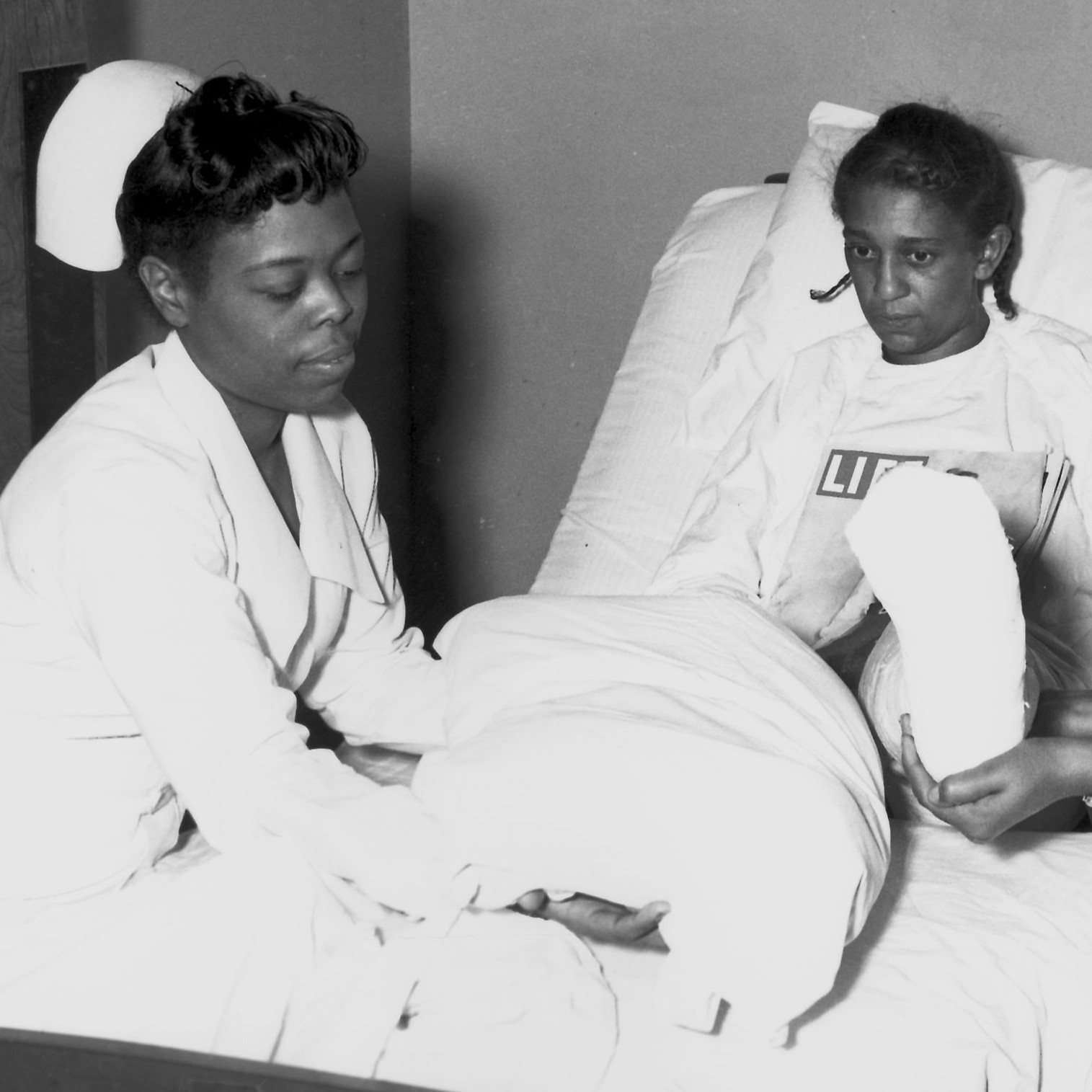
<p >In 1942, the Taborian Hospital opened in Mound Bayou, Mississippi. At a time when most hospitals segregated Black from White patients or turned Black patients away, the Taborian Hospital provided equal treatment and...

<p >For nearly her entire life, Amy Stelly has lived in the Treme district of New Orleans. Her house is near the Claiborne Expressway, a piece of Interstate-10 that was built through the neighborhood in 1969. The...

<p >In 2017, Atlanta's city planning department designated four large green spaces as quote "lungs," that were vital for cooling the city. They announced plans to turn one of these lungs, the South River Forest, into an...

<p >When low income neighborhoods receive new parks and green spaces, it can be a huge win for long-term residents. But greening initiatives can invite what we call "green gentrification." If the rent is cheap and the...

<p >Automated Traffic Enforcement, or ATE, refers to a variety of tools that are used to enforce traffic laws through technology. You usually see them as red light cameras, and speed cameras. But there are also license...

<p >A local bus or train ride usually costs between one and three dollars. But many Americans living in public transportation-dense cities choose to evade paying for transit tickets when possible. They get on the bus...

Episode #4
<p >The 15-minute city, or neighborhood, was conceived by Carlos Moreno, a professor and influencer in Paris. It's an area where residents can access everything they need in their life - food, work, school, community...

<p >In Central Wisconsin, undocumented immigrants from Latin America make up the majority of the workforce in the dairy industry. Although these undocumented folks are allowed to own and register vehicles, they can't...

<p>Many Black students live in over-policed, under-funded communities. School should be a safe space for them, a refuge from surveillance and a place to explore. But almost 70% of public high schools and middle schools...
Recent guests on Arrested Mobility. Study who booked and why before you pitch.
Co-Founder & Scientific Director Entrepreneurship, Territory, Innovation Chair, Asociación de Agentes de Desarrollo Local de la Región de Murcia
Business Development Manager, Charlotte's Theater Gap Initiative
WE ACT for Environmental Justice
Advancing Beyond in Sports
PitchCentric classifies Arrested Mobility under these industries. Guests from them are the closest fit, and each links to the best podcasts in that industry.
Shows with the most semantically similar episode content. Pitch one, pitch all; producers cluster.
Is this podcast yours and you'd like to remove or correct details? Request removal or email privacy@pitchcentric.com.
Questions about the free trial? See the pricing FAQ