The Anglo Saxon Scop
Today, we’re walking into an Anglo-Saxon mead hall to meet the storytellers of early medieval England – the men whose voices carried heroes, monsters, and memories through the centuries. The scop is part historian, part

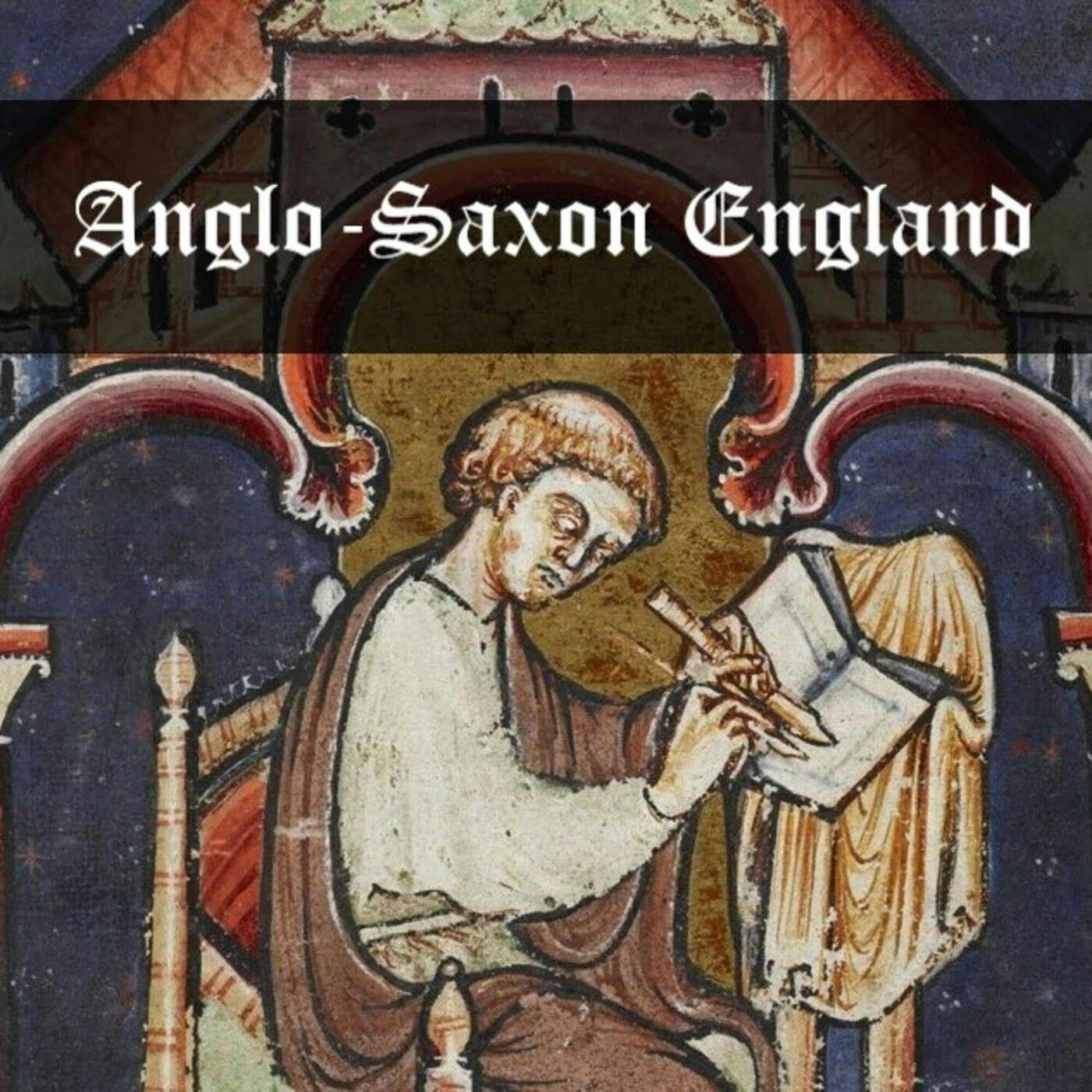
Hosted by Frank Docherty · 🇺🇸 US · EN · 87 episodes
Established thought leaders with verified media credentials.
Welcome to The Wanderer: The Anglo-Saxon Podcast, where the echoes of the past meet the voices of today. Journey through the myths, legends, and beliefs that shaped early medieval England as we explore folklore, religion, and history from an Anglo-Saxon perspective. From the wisdom of wyrd to the haunting beauty of Old English poetry, each episode delves into the rich tapestry of a world both mysterious and familiar. Step into the mead hall, listen to the tales of old, and wander through history with us.paypal.me/EnglishFightingArts
Frank Docherty hosts The Wanderer Anglo Saxon History, mythology, Folklore and religion, a society show with 87 episodes published.

Today, we’re walking into an Anglo-Saxon mead hall to meet the storytellers of early medieval England – the men whose voices carried heroes, monsters, and memories through the centuries. The scop is part historian, part

The Anglo Saxons lived beneath skies they did not trust. To them, the heavens were alive capable of movement, intention, and warning. Night skies were darker than anything we experience today, and people watched them clo

Anglo Saxon heathenism the polytheistic beliefs of the Anglo Saxons before Christianisation centred on a sacred, animistic relationship with nature, worship of gods such as Wōden, Thunaer and Frēo, and veneration of sacr

What Are “Anglo-Saxon Tales”? “Anglo-Saxon” refers to the people who settled in what is now England from roughly the 5th to the 11th centuries (the Angles, the Saxons, the Jutes, etc.) Their tales are the stories, poems,

A Bonus Episode: This episode tells an original story about a brave girl and the mythical little People of the forests. In Anglo-Saxon England, the "little people" referred to supernatural beings like elves and dwarves,

From the 5th to the 11th centuries, Anglo‑Saxon England was shaped by a rich tapestry of religion and magic: early on, villagers and warriors honored a polytheistic pagan pantheon—Wōden, Thunor, Tīw, Frīge—worshipped in

Daily life in Anglo-Saxon England, spanning from the 5th to the 11th centuries, was predominantly rural and centred around agriculture. Most people lived in small villages, often comprising fewer than 100 inhabitants, an

The Peasant Soldier: More Than Just a Farmer The average Anglo-Saxon peasant soldier was not a full time warrior but a member of the Fyrd—a militia of free men called upon in times of war. This system allowed the king or

Following the Norman Conquest of England in 1066, the Anglo-Saxon populace mounted several resistance efforts against William the Conqueror's rule. These uprisings were driven by widespread resentment towards the oppress

In Anglo-Saxon England, murder was regarded as a serious crime, and there were various legal practices and customs in place for dealing with it. These practices evolved over the course of the Anglo-Saxon period (roughly

S. A. Swaffington’s Exploration of the Supernatural in the Anglo-Saxon World S. A. Swaffington, an acclaimed scholar of medieval cultures, delves deeply into the mysterious and spiritually rich world of the Anglo-Saxons

Yule is a pagan celebration rooted in Northern European traditions, marking the winter solstice (around December 21–22). It celebrates the return of the sun and the renewal of life. Common customs include burning a Yule

The conversion of the Anglo-Saxons to Christianity from the 6th to the 8th centuries was a transformative period in British history. It not only marked the decline of the old heathen gods but also represented a profound

Introduction to Anglo-Saxon Leather working Leather working was an essential craft in Anglo-Saxon England (circa 5th to 11th centuries) and played a crucial role in everyday life. The Anglo-Saxons were skilled artisans w

The spear has been a crucial weapon in English warfare, both for its versatility and its effectiveness in various military contexts. Its use spans from the early medieval period through the Renaissance, reflecting the ev

The billhook, often referred to simply as a "bill," is a traditional weapon that originated in medieval Europe, primarily used by infantry soldiers. It evolved from an agricultural tool used for pruning and cutting branc

The "Broken Back Seax" is a type of knife or dagger that was characteristic of the Anglo-Saxons, the Germanic inhabitants of England from the 5th century AD until the Norman Conquest in 1066. The name "seax" itself refer

In Anglo-Saxon England, hide tanning was a significant craft. Hides were processed to create leather, which served various purposes, including clothing, footwear, armor, and household items. Here are some true facts abou

Anglo-Saxon folklore is rich with tales of supernatural beings and shape-shifting entities, though werewolves specifically were not as prominent as in other European cultures. Instead, there was a focus on various mythic

The Anglo-Saxon spear was a crucial weapon in the arsenal of the Anglo-Saxon warriors during the early medieval period, particularly in England from the 5th to the 11th centuries. It was one of the primary weapons used b
Sponsor detection runs nightly. Check back soon.
No public pitch examples yet for this show.
Generate your own personalised pitchBased on semantic analysis of episode topics and host coverage, this show is a strong guest fit for executives in:
Industry fit is computed by PitchCentric using vector embeddings of the show's episode catalog.
Shows with the most semantically similar episode content. Pitch one, pitch all; producers cluster.


The Wanderer Anglo Saxon History, mythology, Folklore and religion has a verified contact on file. Create a free PitchCentric account to access it and generate a personalised pitch in seconds. Research at least 3 recent episodes first and lead with a specific angle that serves their society audience.
The Wanderer Anglo Saxon History, mythology, Folklore and religion is hosted by Frank Docherty. The show is categorised under society (culture) and has published 87 episodes.
The Wanderer Anglo Saxon History, mythology, Folklore and religion has published 87 episodes.
The Wanderer Anglo Saxon History, mythology, Folklore and religion regularly covers society, culture. It sits in the society category, with a culture focus.
The Wanderer Anglo Saxon History, mythology, Folklore and religion is accessible for guests with genuine society expertise. A personalised, episode-aware pitch will still outperform a generic one every time.
The Wanderer Anglo Saxon History, mythology, Folklore and religion hasn't explicitly signalled guest openness in recent episodes. That doesn't rule out pitching. your hook just needs to be especially compelling and relevant to their recent content.
Episodes of The Wanderer Anglo Saxon History, mythology, Folklore and religion average 14 minutes. a focused format where a clear narrative arc and tight preparation matter most.
Our data rates The Wanderer Anglo Saxon History, mythology, Folklore and religion's guest bar at 80/100 (Premium tier). Established thought leaders with verified media credentials. Sign in to PitchCentric to see how your own Pod Score compares against this show.
Methodology. Booking Probability™ blends Listen Score, 30-day Virality, open-to-guests detection, and Apple ratings. Data refreshed every 60 minutes. Listen Score and Booking Probability are calculated by PitchCentric. Last enriched 7 days ago.