Sep 16, 202611 minS8
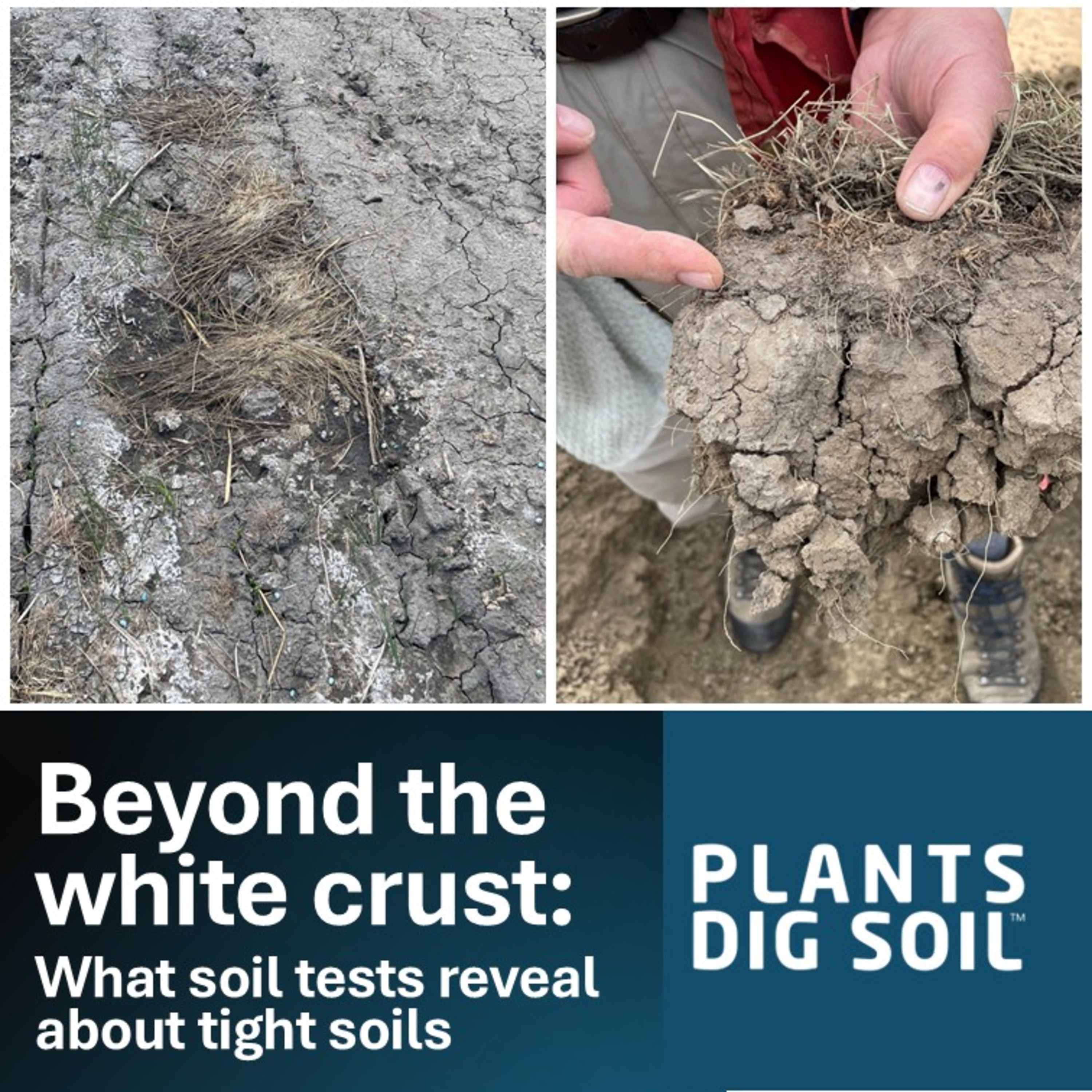
White crust on the soil surface can point to salinity, but it does not tell the whole story. In this episode, I return to my Better Farming Prairies series on tight soils and look at the chemical side of the problem...


science
Hosted by Scott Gillespie · science · EN-CA
#RealisticRegenAg | Writer and consulting agronomist Scott Gillespie presents science-backed practices that promote environmental stewardship and farm profitability.
Required Pod Score for this podcast. PitchCentric checks your profile against host openness, topical fit, and audience signals before you generate a pitch.
Contact path
Public web form
Booking probability
33%
Guest openness
Selective
Sign up to generate a grounded pitch for Plants Dig Soil™.
Signup to Generate a PitchPlants Dig Soil™ is hosted by Scott Gillespie. The show has published 115 episodes to date.
Recent episodes include "Beyond the white crust: What soil tests reveal about tight soils" (16 September 2026, 11 minutes), "Tight soil isn’t a diagnosis: How to separate compaction from chemical soil problems" (4 August 2026, 10 minutes), and "Frost, Heat, and Hail" (15 May 2026, 6 minutes).
Plants Dig Soil™ publishes roughly monthly, with episodes averaging 9 minutes across 115 episodes.
Booking probability for Plants Dig Soil™ is 33%, and the host is rated Selective on guests. Plants Dig Soil™ requires a Pod Score of 80 or higher. Plants Dig Soil™'s contact route on record: public web form.
The strongest fits for Plants Dig Soil™ are Crop Farming Services. Plants Dig Soil™ has a science audience.
Scott Gillespie hosts Plants Dig Soil™, a science podcast with 115 episodes published.
Our AI reads these to draft pitches. Use them as grounding for a pitch that cites a real guest and a specific topic.
White crust on the soil surface can point to salinity, but it does not tell the whole story. In this episode, I return to my Better Farming Prairies series on tight soils and look at the chemical side of the problem...
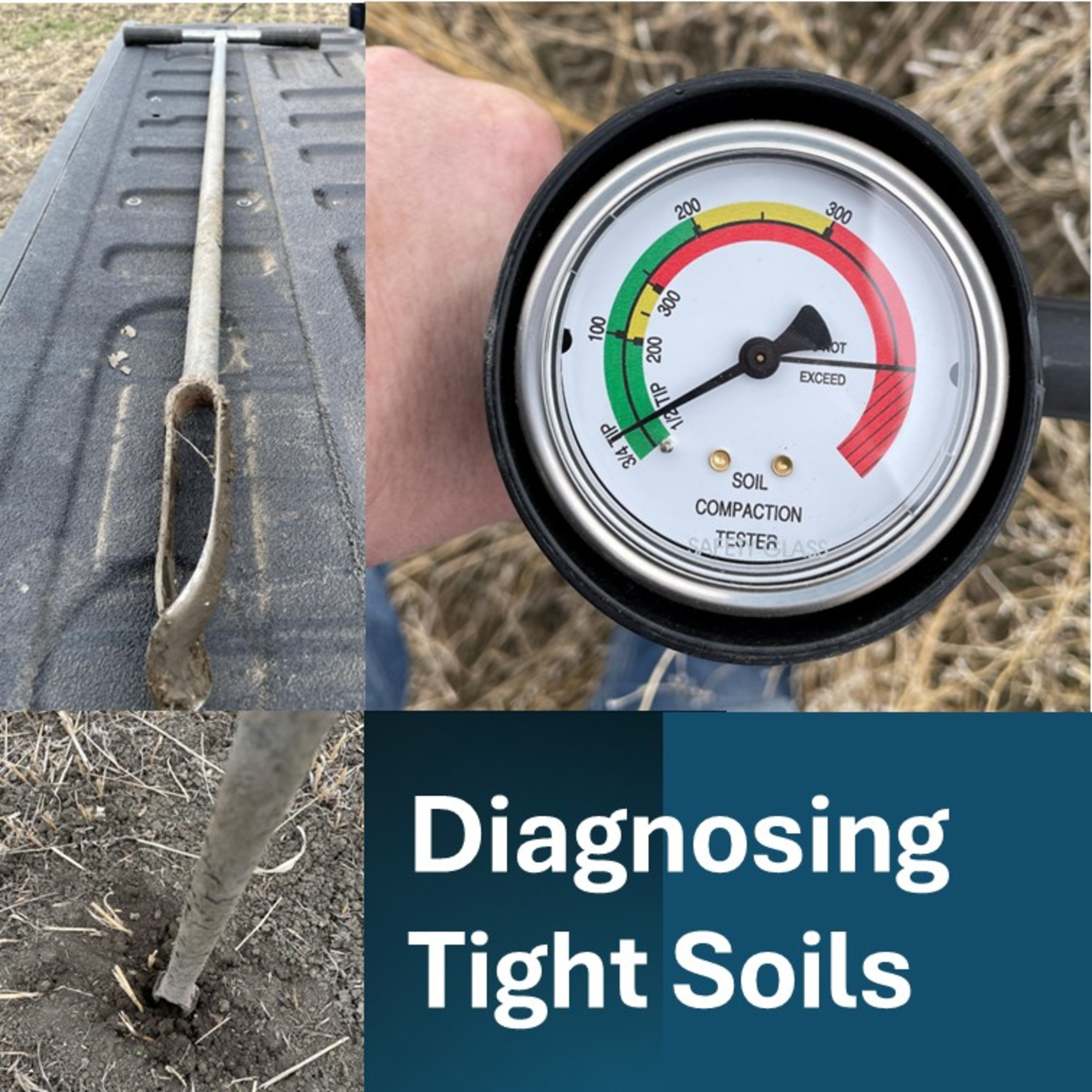
“Tight soil” is a phrase we use a lot, but it isn’t a diagnosis. It’s a symptom. Water pooling, poor crop growth and areas that never seem to perform can all point to very different problems. Sometimes it’s physical...

Episode #5
You can’t plan the weather, but you can plan how you’ll respond when it hits. I’ll walk you through the key principles, grounded in research and on-farm experience. If you want the full breakdown, check out my full...

Episode #4
Have recent geopolitical events left you short on nitrogen? Or are you holding back due to high input costs and uncertainty around how much you’ll sell the crop for? The good news is that for most of our other nutrients...

Episode #3
Residuals, in-crop chemistry, crop competition, and rotation all interact to have a greater effect than what is used in any single season. Listen to learn more, and see an excellent example of how an unintentional check...

Episode #2
For this month, my article focuses on rotation. It’s hard to quantify but the effects of it are real. With weather, markets, and geopolitical risks all very real concerns this year a good rotation adds stability. No one...

Episode #1
Discussion of two recent magazine articles that I wrote. One article looks at pest control through a post-harvest lens — basically treating the season to a post-mortem. The other looks at seed decisions, especially...

Crops take nutrients off the farm. Can food-waste biostimulants bring them back? Are they worth your time and money? In this episode I’ll dig in to nutrient imports, exports, how you can calculate the flows on your...

Episode #6
Soil testing isn’t an expense—it’s an investment. In my latest Better Farming Prairies article, I share how a few dollars per acre in testing can save thousands in fertilizer costs and help you make smarter...

Episode #6
Prairie farmers are skeptical of “soil health” as justanother buzzword — but what if data could make it practical? This episode explores mapping tools, farmer perspectives, and what resilience really looks like in the...

Episode #5
Do you bale your straw or keep it? The basic concept is to ask whether it is helping or hindering you. If baling will remove soil armor and allow rains to erode your land, leave it. If it’s causing issues at seeding...

Plants Dig Soil™
In this edition I talk about how I evaluate new agricultural practices and tools before recommending them to clients. From the challenges of staying current to the importance of third-party data, I share my approach to...

Episode #3
In this episode, I dive into what I’ve learned from applying organic weed control methods in my own garden—from stale seedbeds to blind cultivation—and how those lessons connect to what I see in prairie agriculture. I...

Episode #2
Are tillage and soil carbon compatible? Agronomist andauthor Scott Gillespie shares insights from his new article Soil Carbon & Tillage: Eat Your Cake and Have it Too.” Also – lessons from polycrop systems, organic...

Episode #1
Do you need livestock to build soil health? Agronomist and author Scott Gillespie digs into recent research on grazing cover crops, biomass thresholds, and fungal networks—challenging some of the more popular narratives...
Plants Dig Soil™
Plants Dig Soil https://www.plantsdigsoil.com/ Newsletter signup: https://mailchi.mp/plantsdigsoil/newsletter https://www.linkedin.com/newsletters/6944029544697802752 Practical Regeneration: Realistic Strategies for...

#RealisticRegenAg | Welcome to the final newsletter of the year! As mentioned previously, I’ll be taking a break over the holiday season but will return in early February. If you’re in southern Alberta and would like to...

#RealisticRegenAg | As the season winds down here in southern Alberta, I’ve been busy teaching both diploma and degree students at Lethbridge Polytechnic (formerly Lethbridge College). As is my annual tradition, I’ll be...

Episode #14
#RealisticRegenAg | Cover crops might be giving off more greenhouse gases than bare ground. It's a surprise, for sure. It all comes down to how long they sit in cool and wet conditions. They pull up and hold onto more...

#RealisticRegenAg | White patches in a field are often referred to as alkali patches. The underlying problem may be high pH – alkalinity – but the salt in and of itself is not at a high pH and therefore is not alkaline...
Recent guests on Plants Dig Soil™. Study who booked and why before you pitch.
PitchCentric classifies Plants Dig Soil™ under these industries. Guests from them are the closest fit, and each links to the best podcasts in that industry.
Shows with the most semantically similar episode content. Pitch one, pitch all; producers cluster.
Is this podcast yours and you'd like to remove or correct details? Request removal or email privacy@pitchcentric.com.
Questions about the free trial? See the pricing FAQ