

JJ55 Game Download
Unknown Host
Established thought leaders with verified media credentials.
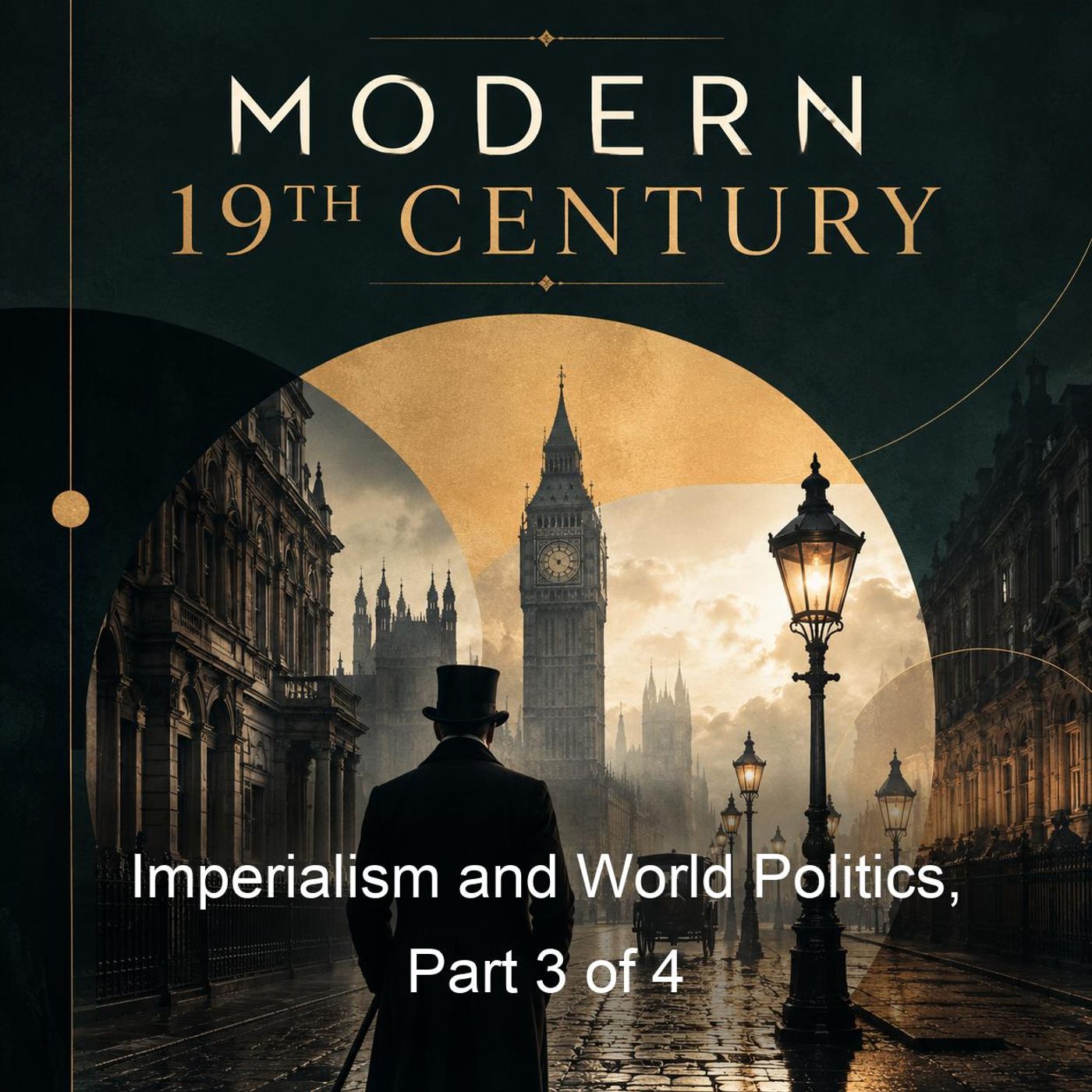
Moon’s Iᴍᴘᴇʀɪᴀʟɪsᴍ ᴀɴᴅ Wᴏʀʟᴅ Pᴏʟɪᴛɪᴄs is perhaps the best-known work of the Columbia University professor and political scientist; It was published in 1926 and did not go out-of-print until at least 1940. “What convenient volume,” he asks, exists as a “general account of the greater imperialism of our own times?” A question which was suitably answered by the publication of this sweeping survey of the field. Written in what would prove to be the gathering twilight of European imperialism, and with the inclination towards reflection that only the aftermath of a great catastrophe like the First World War can evoke, this work spans the globe and follows behind Great Britain, France, Belgium, Italy, Russia, Germany, Japan and the United States as they shaped world politics to their own ends—imposing their will on states, economies and peoples. Moon writes of his work that, “It can make no claim to finality.” Indeed, this is surely not the last word on the subject. Not in the past. Not even, truly, in the present. And yet, Moon’s work does possess a greater degree of finality then he at the time, perhaps, might have credited. THIS IS PART THREE OF FOUR. In this part, Moon rests first on the recent history of British India, and the rise of nationalism. In the words of Moon, “India occupies a most important place in the British Empire, and in world politics,” while also being “the crucial internal problem” of the empire. In the face of a such a large nationalist movement, only “such a miracle as was worked in South Africa, the transformation of Nationalists into Imperialists, could easily solve this problem.” The sub-continent being so preponderant within the Empire, not unlike a tiger bestridden by a pug, mollifying Indian sentiment was a square which was hard to circle. Long engrained racism made such concessions very difficult at the time, and ultimately precluded Great Britain from even trying. If ever there was a prospect, a second world war hollowing out British sinew and resolve would torpedo any chance of holding onto the sub-continent. He also surveys Indochina—today Mainland Southeast Asia—where colonies would be carved out by France and Britain in the Nineteenth Century and Siam—modern day Thailand—would endure as the only country in Southeast Asia to evade colonization due to its utility as a buffer state. Of particular interest, Moon takes the opportunity to compare and contrast the human and economic development in Siam with neighbouring colonial domains. Of China, Moon says “surrounded by vassals and tributaries, China was truly a giant, a giant grown drowsy in centuries of unquestioned supremacy,” and that, “Europe woke the giant.” He quotes U.S. secretary of state John Hay as having said, “Whoever understands that mighty empire . . . has a key to world politics for the next five centuries.” The first rousing startlement—into an unfolding waking nightmare—would be the First Opium War (1839 – 1842) where her fleet would be roughly handled by the East India Company’s ironclad steamship, the Nemesis. Great Britain would pry treaty ports from China, stripping away further her control over her own trade, and compel her to cede an unremarkable island called Hongkong. Chinese history for the following Century of Humiliation would prove to be turbulent. If Japan’s opening to world, at the instigation of Perry, was in any way less of a systemic shock it was only because Japan did not prolong her own agony, but embarked on a crash Westernization with reckless abandon, without reservation. For the Japanese both perceived their own danger more acutely and coveted the potency of Western industrialized power with the full awareness of how such disruptive capabilities might, in their own hands, be just as capable of upending the status quo. In the span of four decades, Japan had joined the ranks of the colonial powers herself—establishing colonies in Korea and China. To embark and succeed in so profound a restructuring of government
Unknown Host hosts Imperialism and World Politics, Part 3 of 4.
Sponsor detection runs nightly. Check back soon.
No public pitch examples yet for this show.
Generate your own personalised pitchShows with the most semantically similar episode content. Pitch one, pitch all; producers cluster.






To pitch Imperialism and World Politics, Part 3 of 4, visit https://www.spreaker.com/podcast/imperialism-and-world-politics-part-3-of-4--7095351 for contact information, then craft a tight one-paragraph hook that ties your expertise to a gap in their recent general coverage.
Imperialism and World Politics, Part 3 of 4 is hosted by Unknown Host. The show is categorised under General (Books) and has published 0 episodes.
Imperialism and World Politics, Part 3 of 4 is accessible for guests with genuine general expertise. A personalised, episode-aware pitch will still outperform a generic one every time.
Imperialism and World Politics, Part 3 of 4 hasn't explicitly signalled guest openness in recent episodes. That doesn't rule out pitching. your hook just needs to be especially compelling and relevant to their recent content.
Our data rates Imperialism and World Politics, Part 3 of 4's guest bar at 80/100 (Premium tier). Established thought leaders with verified media credentials. Sign in to PitchCentric to see how your own Pod Score compares against this show.
Methodology. Booking Probability™ blends Listen Score, 30-day Virality, open-to-guests detection, and Apple ratings. Data refreshed every 60 minutes. Listen Score and Booking Probability are calculated by PitchCentric.