PitchCentric
History of Rome.
Updated 13 days ago · Refreshed hourly
historysociety

History of Rome.

Hosted by Popular Culture and Religion. · EN · 34 episodes

Where this show ranks

Episodes
34
Last ep.
17 days ago
Avg length
6m
Booking Probability™
38
Stretch.
Sign in to score against your profile.
Estimated audience
,
Audience size not yet estimated
Listen Score
22
Niche reach.
Virality (30d)
47
Steady cadence.

Pitch Analysis

Sign in to see how your Guest Score compares to this show's Required Pod Score and get a Stretch / Match-fit / Anchor verdict.
Required Pod Score
80/ 100
Premium

Established thought leaders with verified media credentials.

Guest openness
Not signalled recently
Best topics to pitch
historysocietyculture

About this podcast

Ancient Rome (753 B.C.E. – 476 C.E.) evolved from a small Italian village into a massive Mediterranean empire, structured into three main eras: Kingdom, Republic, and Empire. Known for its engineering, military prowess, and legal systems, it transitioned from a monarchy to a republic, then to an empire under Augustus. The Western Empire fell in 476 C.E. due to instability, but left a lasting legacy on Western law, language, and culture.

historysocietyculture

About the host

Popular Culture and Religion. hosts History of Rome., a history show with 34 episodes published.

Recent episodes

Our AI reads these to draft pitches

34 - Military technology.

Mar 4, 20267m

Military technology. The Roman military technology ranged from personal equipment and armament to deadly siege engines. Foot soldier. Weaponry. The pilum (javelin) was a weapon favored by legionaries and weighed approxim
Show notes

33 - Transportation.

Mar 4, 20264m

Transportation. Roads. The Romans primarily built roads for their military. Their economic importance was probably also significant, although wagon traffic was often banned from the roads to preserve their military value

Show notes

32 - Waterworks.

Mar 4, 20261m

Waterworks. Sanitation. The Romans did not invent plumbing or toilets but instead borrowed their waste disposal system from their neighbors, particularly the Minoans. A waste disposal system was not a new invention, but

Show notes

31 - Engineering and construction.

Mar 4, 20269m

Engineering and construction. Wood. The Romans created fireproof wood by coating the wood with alum. Stone. It was ideal to mine stones from quarries that were situated as close to the site of construction as possible, t

Show notes

30 - Ancient Roman technology.

Mar 4, 20266m

Ancient Roman technology. Ancient Roman technology is the collection of techniques, skills, methods, processes, and engineering practices which supported Roman civilization and made possible the expansion of the economy

Show notes

29 - Collapse in the West and survival in the East (395–476 AD).

Mar 4, 20262m

Collapse in the West and survival in the East (395–476 AD). The non-federated mobile field army, known as the comitatenses, was eventually split into a number of smaller field armies: a central field army under the emper

Show notes

28 - Comitatenses and limitanei (284–395 AD).

Mar 4, 20268m

Comitatenses and limitanei (284–395 AD). A distinction between frontier guard troops and more mobile reserve forces had emerged with the use of certain troops to permanently man frontiers such as Hadrian's Wall in Britan

Show notes

27 - The army during the decline of the Empire.

Mar 4, 20266m

The army during the decline of the Empire. Barbarisation of the army (117–253 AD). By the time of the emperor Hadrian the proportion of Italians in the legions had fallen to just ten percent and provincial citizens now d

Show notes

26 - The army at the height of the Empire.

Mar 4, 20266m

The army at the height of the Empire. Imperial legions and reformation of the auxilia (27 BC – 117 AD). By the turn of the millennium, Emperor Augustus' primary military concern was to prevent Roman generals from further

Show notes

25 - Marian legion (107–27 BC).

Mar 4, 20267m

Marian legion (107–27 BC). Modern historiography has regularly cast Marius as abolishing the propertied militia and replacing it with landless soldiers motivated largely by pay. This belief emerges from the ancient liter

Show notes

24 - Professionalisation during the Republican period.

Mar 4, 20268m

Professionalisation during the Republican period. Manipular legion (315–107 BC). The army of the early Republic continued to evolve, and although there was a tendency among Romans to attribute such changes to great refor

Show notes

23 - Early Roman army.

Mar 4, 20266m

Early Roman army. Tribal forces (c. 752 BC – c. 578 BC). According to the historians Livy and Dionysius of Halicarnassus, writing at a far later date, the earliest Roman army existed in the 8th century BC. During this pe

Show notes

22 - Structural history of the Roman military.

Mar 3, 20262m

Structural history of the Roman military. The structural history of the Roman military concerns the major transformations in the organization and constitution of ancient Rome's armed forces, "the most effective and long-

Show notes

21 - Roman Kingdom, part 3.

Mar 3, 20264m

Roman Kingdom, part 3. Servius Tullius. Priscus was succeeded by his son-in-law Servius Tullius, Rome's second king of Etruscan birth, and the son of a slave. Like his father-in-law, Servius fought successful wars agains

Show notes

20 - Roman Kingdom, part 2.

Mar 3, 20269m

Roman Kingdom, part 2. Senate. According to legend, Romulus established the Senate after he founded Rome by personally selecting the most noble men (wealthy men with legitimate wives and children) to serve as a council f

Show notes

19 - Roman Kingdom, part 1.

Mar 3, 20269m

Roman Kingdom, part 1. The Roman Kingdom, also known as the Roman monarchy and the regal period of ancient Rome, was the earliest period of Roman history, when the city and its territory were ruled by kings. According to

Show notes

18 - Natale di Roma.

Mar 3, 20266m

Natale di Roma. Natale di Roma (or 'Birthday of Rome') is an annual festival held in Rome on April 21 to celebrate the legendary founding of the city. According to legend, Romulus is said to have founded the city of Rome

Show notes

17 - Romulus and Remus.

Mar 3, 20268m

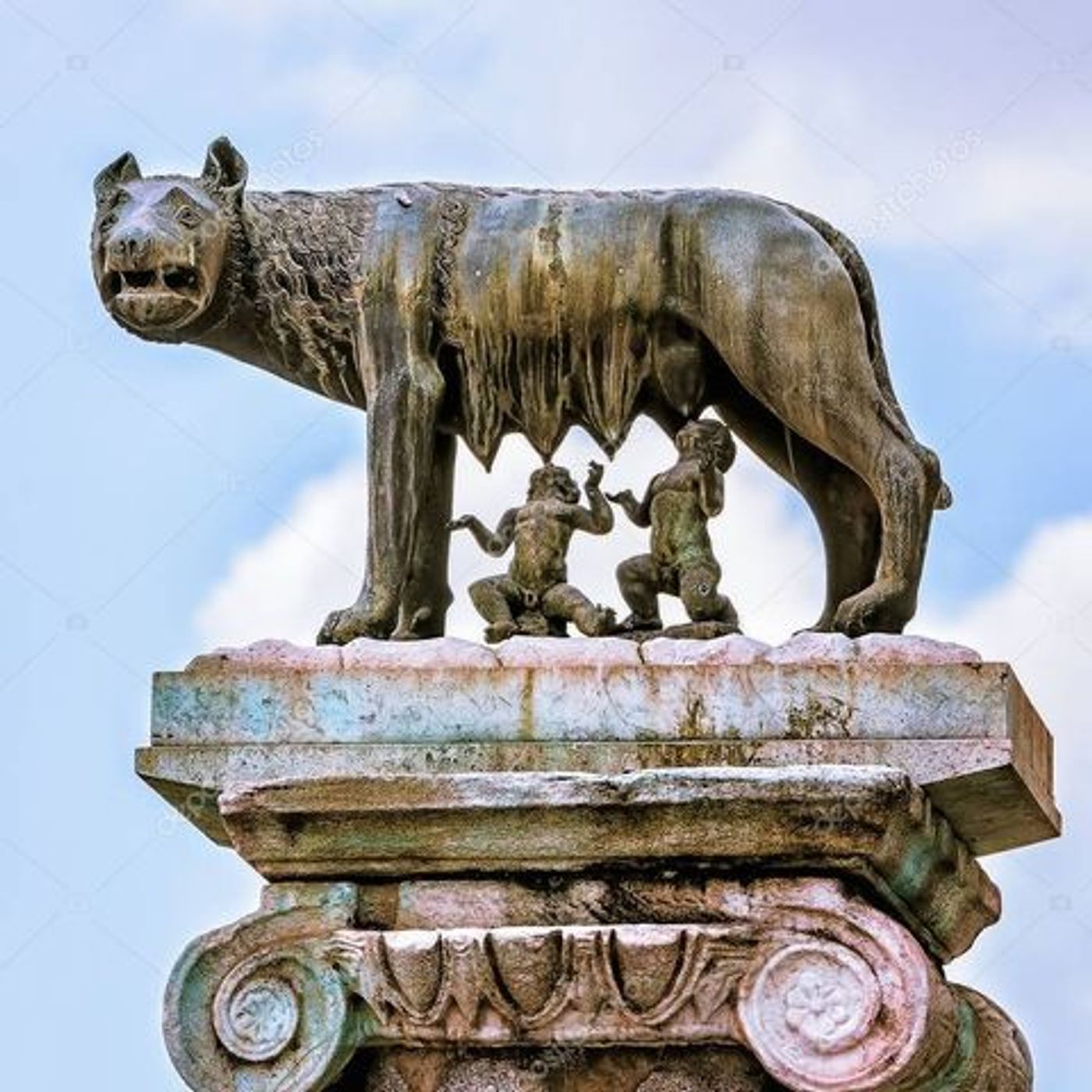
Romulus and Remus. In the best known form of the legend, Romulus and Remus are the grandsons of Numitor, the king of Alba Longa. After Numitor is deposed by his brother Amulius and his daughter Rhea Silvia is forced to b

Show notes

16 - Ancient tradition and founding myths.

Mar 3, 20264m

Ancient tradition and founding myths. By the late Republic, the usual Roman origin myth held that their city was founded by a Latin named Romulus on the day of the Parilia Festival (21 April) in some year around 750 BC.

Show notes

15 - Archaeological evidence.

Mar 3, 20265m

Archaeological evidence. There is archaeological evidence of human occupation of the area of modern Rome from at least 5,000 years ago, but the dense layer of much younger debris obscures any Palaeolithic and Neolithic s

Show notes

Sponsors and advertisers

Sponsor detection runs nightly. Check back soon.

Audience demographics

Age
25-54
Consumer type
Lifelong learners

Topics covered

historysocietyculture

Successful pitch examples

No public pitch examples yet for this show.

Generate your own personalised pitch

Best industries to pitch History of Rome. for

Based on semantic analysis of episode topics and host coverage, this show is a strong guest fit for executives in:

Industry fit is computed by PitchCentric using vector embeddings of the show's episode catalog.

Similar podcasts to History of Rome.

Shows with the most semantically similar episode content. Pitch one, pitch all; producers cluster.

Frequently asked questions

How do I pitch History of Rome. as a podcast guest?

To pitch History of Rome., visit https://euram-radio.blogspot.com/ for contact information, then craft a tight one-paragraph hook that ties your expertise to a gap in their recent history coverage.

Who is the host of History of Rome.?

History of Rome. is hosted by Popular Culture and Religion.. The show is categorised under history (society) and has published 34 episodes.

How many episodes does History of Rome. have?

History of Rome. has published 34 episodes.

What topics does History of Rome. cover?

History of Rome. regularly covers history, society, culture. It sits in the history category, with a society focus.

Is it hard to get booked on History of Rome.?

History of Rome. is accessible for guests with genuine history expertise. A personalised, episode-aware pitch will still outperform a generic one every time.

Is History of Rome. currently accepting guest pitches?

History of Rome. hasn't explicitly signalled guest openness in recent episodes. That doesn't rule out pitching. your hook just needs to be especially compelling and relevant to their recent content.

How long are History of Rome. episodes?

Episodes of History of Rome. average 6 minutes. a focused format where a clear narrative arc and tight preparation matter most.

What guest credentials does History of Rome. typically look for?

Our data rates History of Rome.'s guest bar at 80/100 (Premium tier). Established thought leaders with verified media credentials. Sign in to PitchCentric to see how your own Pod Score compares against this show.

Methodology. Booking Probability™ blends Listen Score, 30-day Virality, open-to-guests detection, and Apple ratings. Data refreshed every 60 minutes. Listen Score and Booking Probability are calculated by PitchCentric. Last enriched 13 days ago.

Is this podcast yours and you'd like to remove or correct details? Request removal or email privacy@pitchcentric.com.