
Este meme es puro castellano medieval: «quién» plural
Jun 16, 20251m0
Short en YouTube: https://youtube.com/shorts/ARK34E8xbTw
Show notesHosted by Paco Álvarez · ES · 24 episodes
Established thought leaders with verified media credentials.
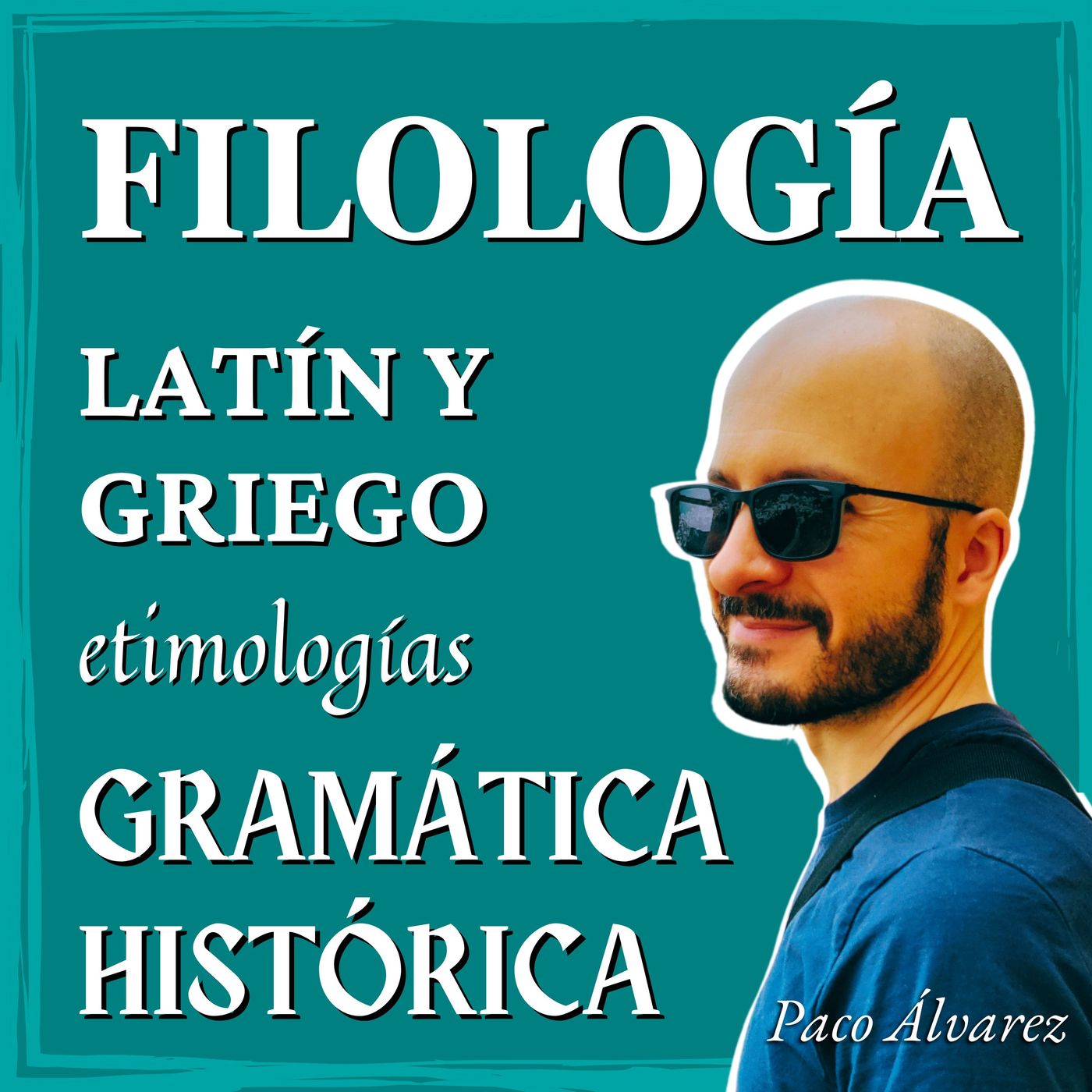
Un pódcast de filología y lingüística en general y de gramática histórica en particular, en el que hablaremos de la historia y evolución de las lenguas (principalmente el español desde el latín), de interesantes y curiosas etimologías y en menor medida de cuestiones relacionadas más concretamente con el latín , el griego y el mundo clásico. Soy Paco Álvarez, el filólogo clásico que está detrás de ACADEMIALATIN.com y DELCASTELLANO.com , así como del canal de YouTube @pacusphilologus y de diversas cuentas en redes sociales ( @delcastellano ), donde divulgo sobre estos mismos temas. Y, si te gustan los contenidos de este pódcast, en mi boletín hay mucho más y mejor
Paco Álvarez hosts Filología: etimologías, gramática histórica, latín y griego..., a education show with 24 episodes published.
Short en YouTube: https://youtube.com/shorts/ARK34E8xbTw
Show notesShort en YouTube: https://youtube.com/shorts/cthGSO7kJkY
Show notesVeremos de forma fácil y sencilla la pronunciación eclesiástica «estándar», la del Vaticano, que tiene algunas diferencias importantes respecto a la pronunciación restituida, la conocida como «pronuntiatio restituta» del
Show notesShort en YouTube: https://youtube.com/shorts/TXqG5nvGiGc
Show notesShort en YouTube: https://youtube.com/shorts/3h2947IBmjg
Show notesHaremos un breve COMENTARIO SOBRE UN TEXTO MEDIEVAL, que leeremos con PRONUNCIACIÓN MEDIEVAL e iremos anotando los rasgos más importantes. Aunque hemos explicado de forma ligera la teoría y la hemos acompañado de bastant
Show notesReel en YouTube: https://youtube.com/shorts/Bnah5jJVvuM
Show notesShort en YouTube: https://youtube.com/shorts/abHn4FQDGVE
Show notesHay una leyenda urbana según la cual la pronunciación de zeta como interdental /θ/ viene de un rey que ceceaba. Con los datos lingüísticos en la mano, desmontaremos este mito. 📺 Vídeo en YouTube: https://youtu.be/T6KP1X
Show notesShort en YouTube: https://youtube.com/shorts/VRLQQYJCPQs
Show notesShort en YouTube: https://youtube.com/shorts/blxJjDs57eQ
Show notesMuy poco tiene que ver el uso actual con el ORIGEN ETIMOLÓGICO DE «IDIOTA», que llegó al español a través del latín IDIOTA, desde el original griego ἰδιώτης. El adjetivo «idiota» se usa principalmente como un insulto hoy
Show notesShort en YouTube: https://youtube.com/shorts/Vxprpg2lnjY
Show notesShort en YouTube: https://youtube.com/shorts/jhl8KyvUc0o
Show notesAunque en su inmensa mayoría el léxico del latín clásico y del latín vulgar son comunes, también encontramos diferencias en palabras completamente diferentes o mismas palabras con significados diferentes. Como cabe esper
Show notesShort en YouTube: https://youtube.com/shorts/xsS2BI09Ch4
Show notesShort en YouTube: https://youtube.com/shorts/gxVALnr8uxQ
Show notesLas etimologías de «murciélago» y «musaraña» están bastante relacionadas, como puede sospecharse por ese comienzo tan parecido. Ambos animales tienen un razonable parecido físico con los ratones (aunque biológicamente no
Show notesAlfonso X nos cuenta la historia de la metamorfosis de Ío por parte de Júpiter para ocultársela a Juno. Leemos con pronunciación medieval (se intenta, al menos) y comentamos algunos rasgos y vocablos característicos del
Show notesChuleta sencilla y razonablemente clara sobre cuándo usar «tú», «vos», «vosotros», etc., en textos que pretenden reflejar el habla medieval (p. ej. novelas históricas o incluso cuentos de hadas). 📺 Vídeo en YouTube: htt
Show notesSponsor detection runs nightly. Check back soon.
No public pitch examples yet for this show.
Generate your own personalised pitchBased on semantic analysis of episode topics and host coverage, this show is a strong guest fit for executives in:
Industry fit is computed by PitchCentric using vector embeddings of the show's episode catalog.
Shows with the most semantically similar episode content. Pitch one, pitch all; producers cluster.





Filología: etimologías, gramática histórica, latín y griego... has a verified contact on file. Create a free PitchCentric account to access it and generate a personalised pitch in seconds. Research at least 3 recent episodes first and lead with a specific angle that serves their education audience.
Filología: etimologías, gramática histórica, latín y griego... is hosted by Paco Álvarez. The show is categorised under education (language) and has published 24 episodes.
Filología: etimologías, gramática histórica, latín y griego... has published 24 episodes.
Filología: etimologías, gramática histórica, latín y griego... regularly covers education, language, learning. It sits in the education category, with a language focus.
Filología: etimologías, gramática histórica, latín y griego... is accessible for guests with genuine education expertise. A personalised, episode-aware pitch will still outperform a generic one every time.
Filología: etimologías, gramática histórica, latín y griego... hasn't explicitly signalled guest openness in recent episodes. That doesn't rule out pitching. your hook just needs to be especially compelling and relevant to their recent content.
Episodes of Filología: etimologías, gramática histórica, latín y griego... average 6 minutes. a focused format where a clear narrative arc and tight preparation matter most.
Our data rates Filología: etimologías, gramática histórica, latín y griego...'s guest bar at 80/100 (Premium tier). Established thought leaders with verified media credentials. Sign in to PitchCentric to see how your own Pod Score compares against this show.
Methodology. Booking Probability™ blends Listen Score, 30-day Virality, open-to-guests detection, and Apple ratings. Data refreshed every 60 minutes. Listen Score and Booking Probability are calculated by PitchCentric. Last enriched 12 days ago.