PitchCentric
EDO·OS | Governance of the Future
Updated 11 days ago · Refreshed hourly
Sciencescience

EDO·OS | Governance of the Future

Hosted by Unknown Host · 🇺🇸 US · EN · 21 episodes

Where this show ranks

Episodes
21
Last ep.
16 days ago
Avg length
22m
Booking Probability™
28
Stretch.
Sign in to score against your profile.
Estimated audience
,
Audience size not yet estimated
Listen Score
19
Niche reach.
Virality (30d)
46
Steady cadence.

Pitch Analysis

Sign in to see how your Guest Score compares to this show's Required Pod Score and get a Stretch / Match-fit / Anchor verdict.
Required Pod Score
80/ 100
Premium

Established thought leaders with verified media credentials.

Guest openness
Not signalled recently
Best topics to pitch
ScienceSocialTechnology

About this podcast

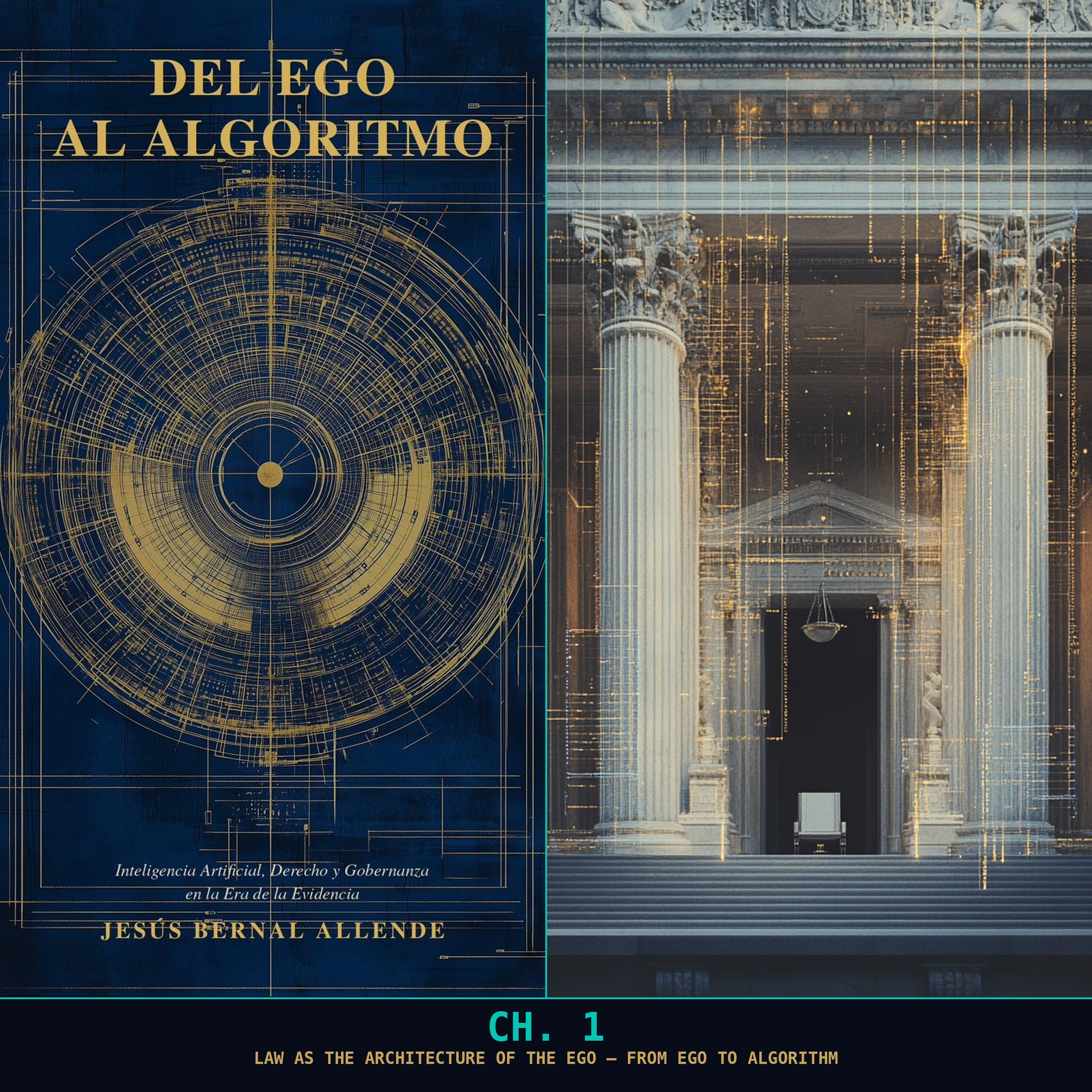
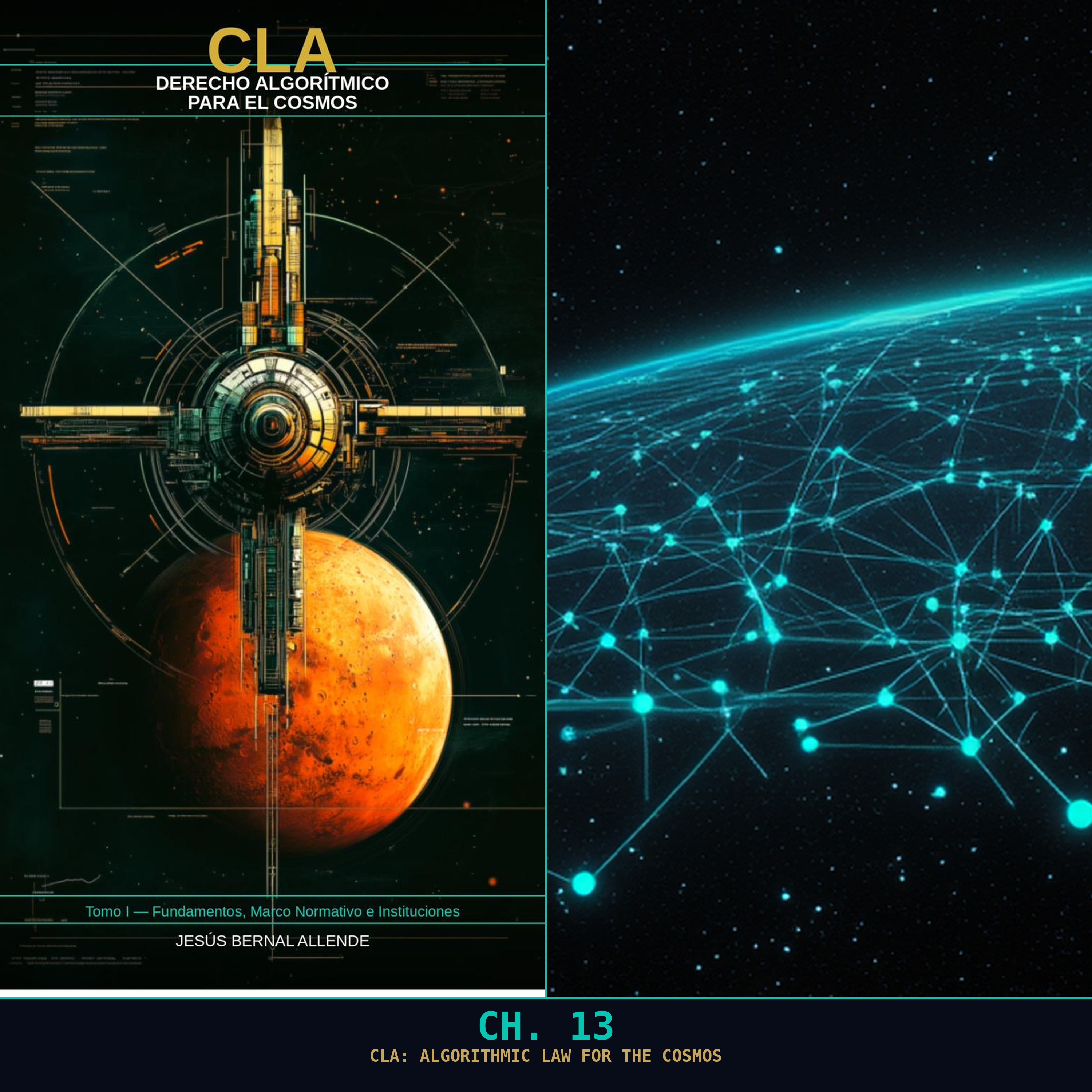
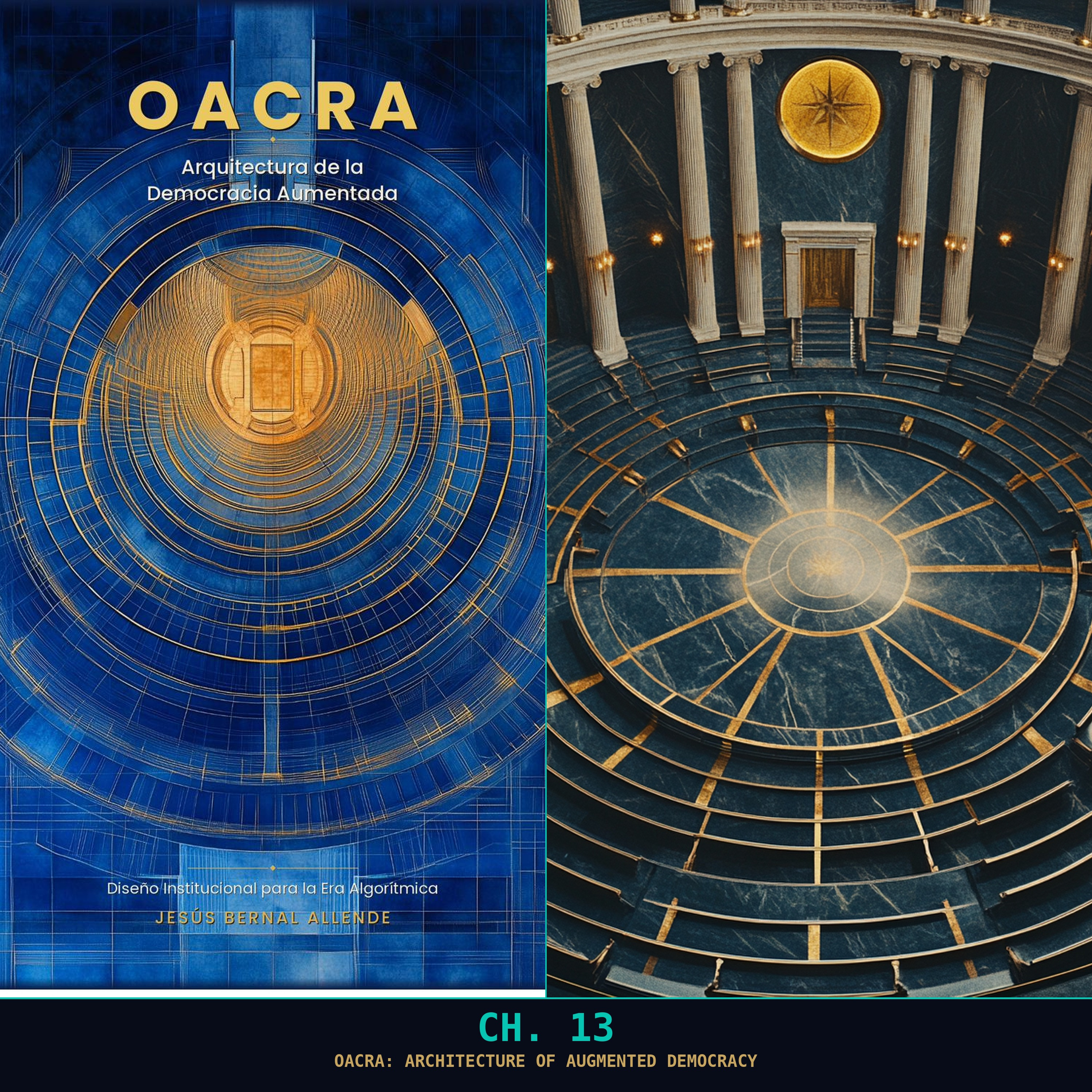
What if the institutions we build today determine whether the humanity that reaches the cosmos deserves to have tried? In an era where AI amplifies everything human — rationality and corruption alike — algorithmic governance cannot be improvised. EDO·OS explores the complete institutional architecture for the algorithmic age: Common Law for the Cosmos, democratic oversight, and the absolute limit no optimization crosses. Academic analysis for those who prefer to think before the window closes. A production of EDO·OS.

ScienceSocialTechnology

About the host

Unknown Host hosts EDO·OS | Governance of the Future, a science show with 21 episodes published.

Recent episodes

Our AI reads these to draft pitches

OACRA | Ch. 10 — Citizen Veto: Last Safeguard Against Legislative Capture

May 21, 202621m0

On September 4, 2024, the Mexican Congress approved with 359 votes a constitutional reform that dismantled the professional appointment system for federal judges. Forty-eight hours passed between the initiative's introdu

Show notes

CLA | Ch. 9 — Algorithmic Liability and Accountability Chains

May 19, 202622m0

Who is liable when the damage is caused by a decision made in milliseconds by a system whose causal chain runs through the designer, the operator, the certifier, the model trainer, and the regulatory framework that autho

Show notes

OACRA | Ch. 9 — Legislative Coherence Index: Electoral Accountability Based on Aggregate Voting Behavior

May 18, 202620m0

How many citizens know how their legislator voted on the last hundred bills — and whether those votes ignored available technical evidence? In April 2021, Colombians took to the streets because they had no other tool to

Show notes

OACRA | Ch. 8 — Democratic Subsidiarity: When the System Must Stay Silent

May 1, 202622m0

In 2011, Sarah Wysocki was finishing her second year as a fifth-grade teacher in Washington D.C. Her assistant principal described her as a model for colleagues. Parents called her creative and visionary. Two months late

Show notes

CLA | Ch. 8 — Taxonomy of Space AI Systems: The Regulatory Cube

Apr 30, 202624m0

On September 2, 2019, the European Space Agency fired Aeolus's thrusters at 320 kilometers altitude to avoid Starlink 44. The collision probability had climbed to 1 in 1,000 — ten times ESA's action threshold. SpaceX, no

Show notes

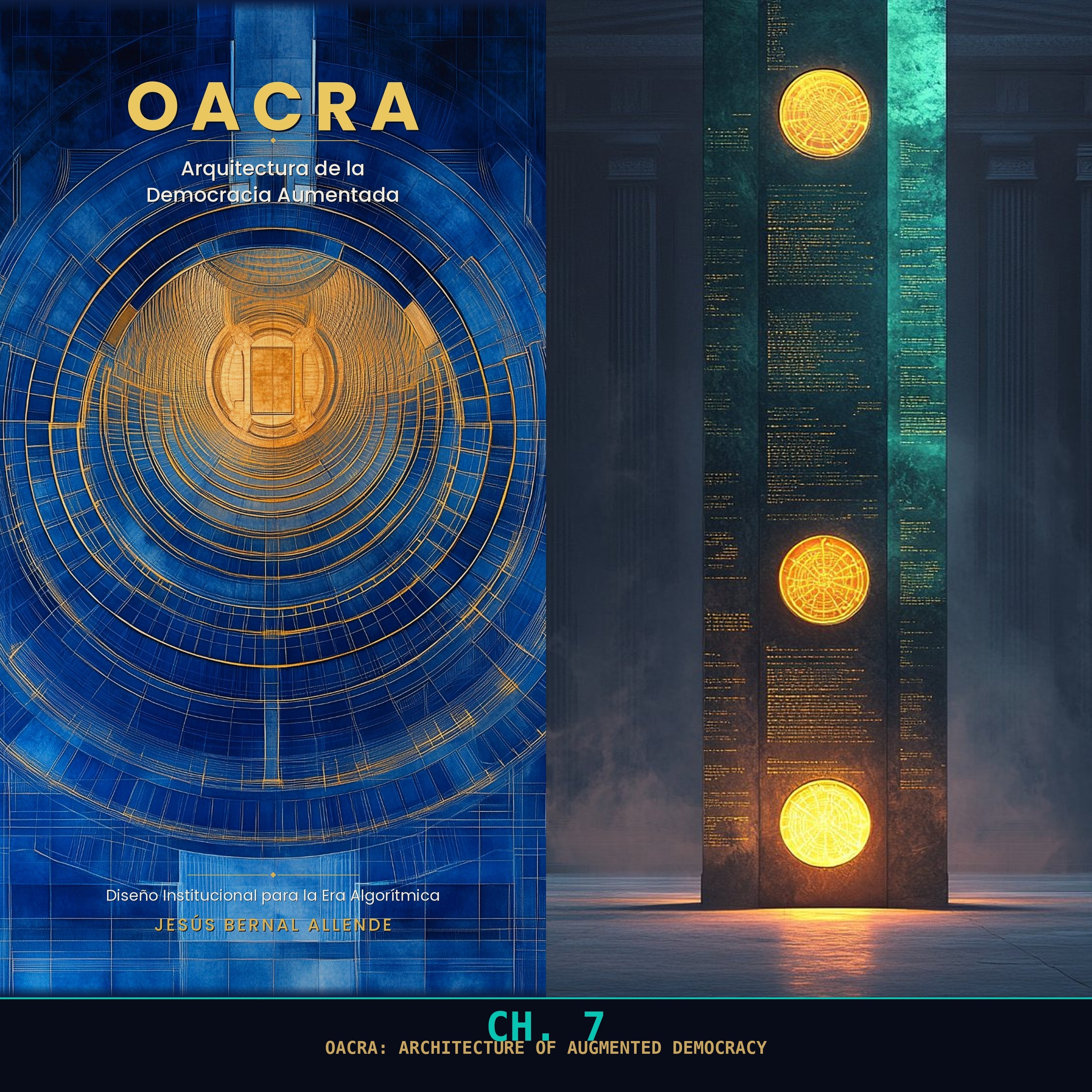
OACRA | Ch. 7 — The Constitutionality Semaphore: Graduated Consequences Without Algorithmic Veto

Apr 28, 202623m0

Can a technical tool reshape the legislative process without stripping Congress of its final say? On February 13, 2026, the Mexican government introduced a bill to recognize the human voice as a protected artistic instru

Show notes

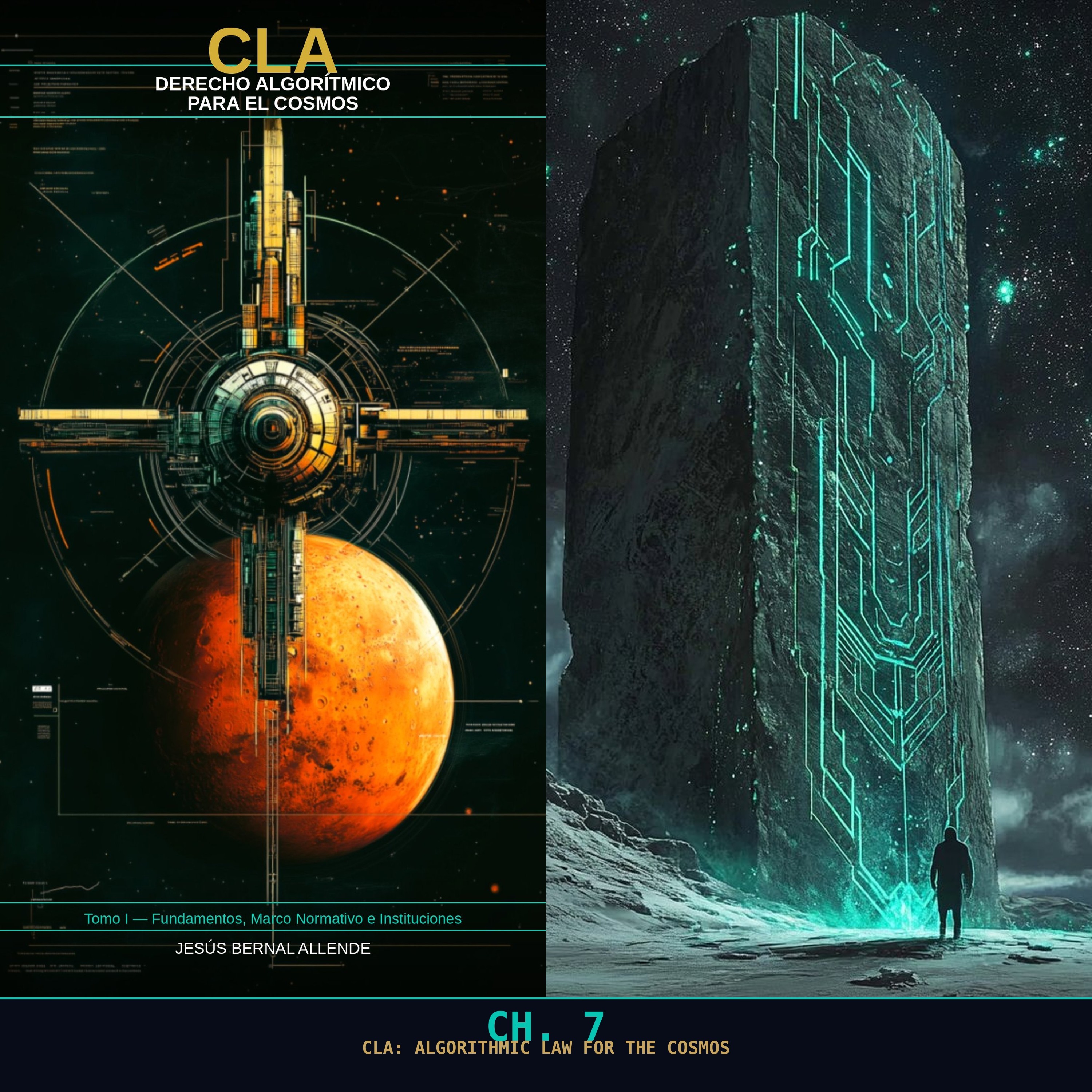
CLA | Ch. 7 — Algorithmic Dignity and the Thresholds of Inviolability

Apr 27, 202623m0

Can a system be demonstrably efficient and radically unjust at the same time — without breaking a single rule it designed for itself? In 2018, a hiring algorithm deployed by a major tech firm systematically screened out

Show notes

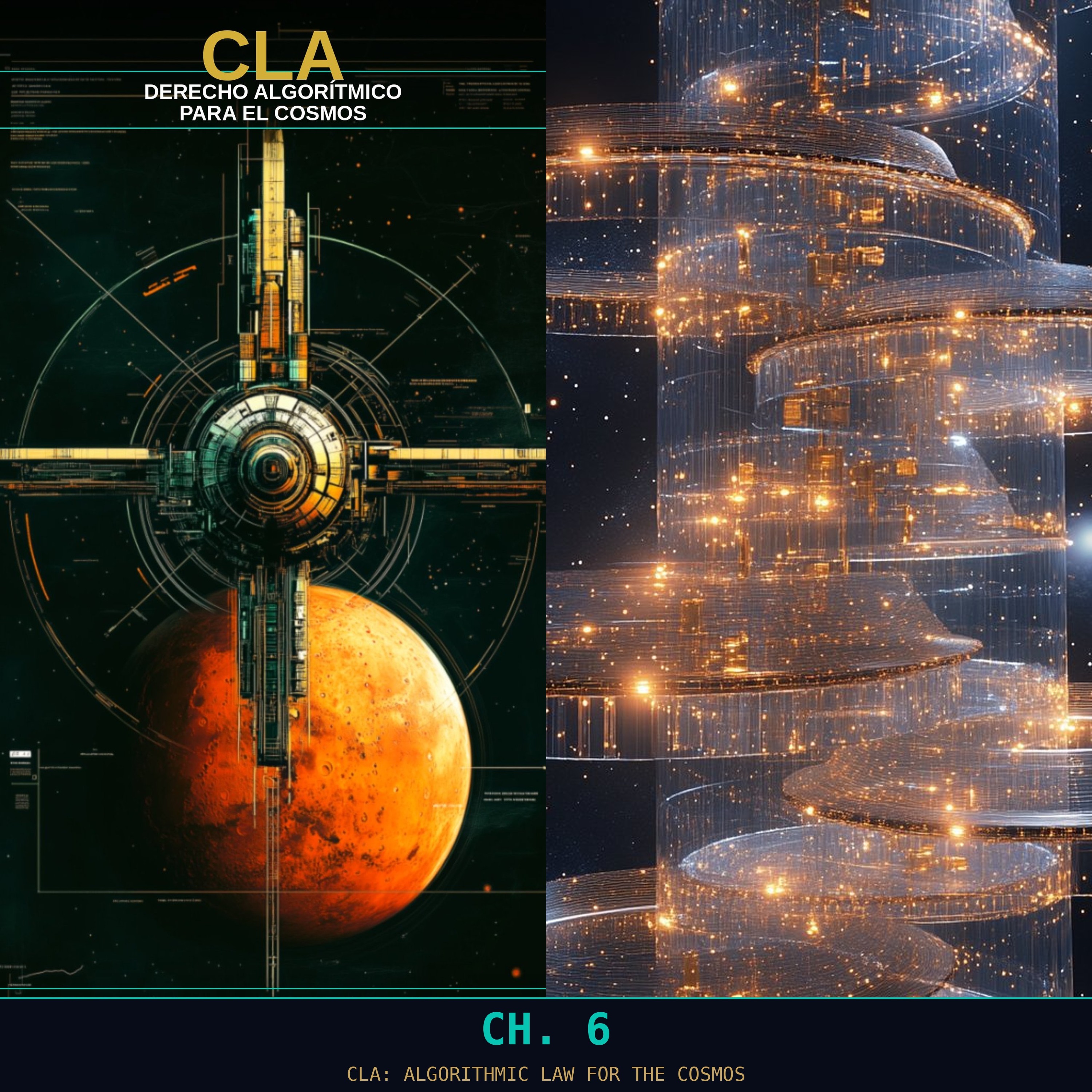
CLA | Ch. 6 — The Sovereignty of Evidence: Anti-Capture Epistemic Infrastructure

Apr 24, 202622m0

If authority that cannot show why it rules is not authority but inertia, what institutional infrastructure ensures that the evidence legitimizing an algorithmic system is not produced by the very actor with the greatest

Show notes

OACRA | Ch. 6 — Consequence Maps: Radical Transparency of Legislative Trade-offs

Apr 23, 202621m0

If every law is a choice about who to benefit and who to sacrifice, why do legislatures keep voting without knowing what they are choosing? Between 2010 and 2012, Spain passed two successive labor reforms that promised t

Show notes

CLA | Ch. 5 — Validity by Critical Efficiency (VCE): The Validation System for Algorithmic Law

Apr 22, 202621m0

If a norm no one can verify is not a norm but a hope, what makes an algorithmic decision legally valid when no one enacted it, no one interpreted it, and no one had time to deliberate on it? The question is not hypotheti

Show notes

OACRA | Ch. 5 — The Parliament of Models: Algorithmic Pluralism as a Democratic Safeguard

Apr 21, 202620m0

If perfect algorithmic fairness is mathematically impossible, how can artificial intelligence evaluate legislation without imposing a single moral philosophy on democratic deliberation? In 2016, a dispute between ProPubl

Show notes

CLA | Ch. 4 — From Tool to Normative Agent

Apr 16, 202622m0

The question is no longer whether machines can think. It is whether machines that make decisions with legal consequences can continue to be treated as simple objects. Between Earth and Mars there are between 4 and 24 min

Show notes

OACRA | Ch. 4 — Theoretical-Normative Framework: Foundations of Algorithmically Augmented Democracy

Apr 16, 202621m0

If ambition must counteract ambition, what will counteract the algorithm? In September 2024, the Mexican Senate approved the most sweeping judicial reform in decades. In under fifteen days. Without technical impact analy

Show notes

CLA | Ch. 3 — The Founding Charter of the Escuela del Deber-Optimizar

Apr 15, 202622m0

Technology is not neutral: it amplifies what we are. If we are just, it will amplify justice. If we are tyrants, it will amplify tyranny. Institutional design determines what gets amplified. This episode presents the fou

Show notes

OACRA | Ch. 3 — Lessons from the World: International Experiences in Institutional Innovation with AI

Apr 15, 202623m0

Copying a model is the fastest way to import its flaws. Extracting principles is the slowest way to build something that works. This episode examines five international experiences —three successful with limitations, two

Show notes

OACRA | Ch. 2 — Five Structural Failures in Latin American Legislative Governance

Apr 9, 202622m0

The talent exists. The data exists. The warnings exist. What does not exist is an institutional architecture connecting them to the legislative decision. This episode diagnoses five structural governance failures in Lati

Show notes

CLA | Ch. 2 — Classical Legal Architecture Against the Cosmic Void

Apr 8, 202622m0

Kelsen presupposed territory. Hart presupposed community. Dworkin presupposed time. Luhmann presupposed closure. Space eliminates all four. Chapter 2 of CLA examines the four dominant theoretical architectures of twentie

Show notes

OACRA | Ch. 1 — The Crossroads of Algorithmic Democracy

Apr 7, 202622m0

Can algorithms govern democratically? That is the question at the heart of Chapter 1 of OACRA. Through four documented cases with verifiable evidence —COMPAS (USA), SyRI (Netherlands), Internet Courts (China), and Aadhaa

Show notes

CLA | Ch. 1 — Space as a Rupture of the Legal Paradigm

Apr 6, 202622m0

Westphalia was an engineering solution, not an eternal truth. Space is the environment where that engineering stops working. Chapter 1 of CLA: Algorithmic Law for the Cosmos argues that outer space is not simply a new do

Show notes

CLA: Algorithmic Law for the Cosmos | The Void No Treaty Can Fill |

Mar 30, 202621m0

In September 2022, Elon Musk unilaterally decided not to activate Starlink over Crimea. No tribunal. No appeal. A private individual exercised veto power over a sovereign state's military operation — and the world had to

Show notes

Sponsors and advertisers

Sponsor detection runs nightly. Check back soon.

Audience demographics

Age
25-54
Consumer type
Lifelong learners

Topics covered

ScienceSocialTechnology

Successful pitch examples

No public pitch examples yet for this show.

Generate your own personalised pitch

Best industries to pitch EDO·OS | Governance of the Future for

Based on semantic analysis of episode topics and host coverage, this show is a strong guest fit for executives in:

Industry fit is computed by PitchCentric using vector embeddings of the show's episode catalog.

Similar podcasts to EDO·OS | Governance of the Future

Shows with the most semantically similar episode content. Pitch one, pitch all; producers cluster.

Frequently asked questions

How do I pitch EDO·OS | Governance of the Future as a podcast guest?

To pitch EDO·OS | Governance of the Future, visit https://deber-optimizar.mx/ for contact information, then craft a tight one-paragraph hook that ties your expertise to a gap in their recent science coverage.

Who is the host of EDO·OS | Governance of the Future?

EDO·OS | Governance of the Future is hosted by Unknown Host. The show is categorised under Science (science) and has published 21 episodes.

How many episodes does EDO·OS | Governance of the Future have?

EDO·OS | Governance of the Future has published 21 episodes.

What topics does EDO·OS | Governance of the Future cover?

EDO·OS | Governance of the Future regularly covers Science, Social, Technology. It sits in the Science category, with a science focus.

Is it hard to get booked on EDO·OS | Governance of the Future?

EDO·OS | Governance of the Future is accessible for guests with genuine science expertise. A personalised, episode-aware pitch will still outperform a generic one every time.

Is EDO·OS | Governance of the Future currently accepting guest pitches?

EDO·OS | Governance of the Future hasn't explicitly signalled guest openness in recent episodes. That doesn't rule out pitching. your hook just needs to be especially compelling and relevant to their recent content.

How long are EDO·OS | Governance of the Future episodes?

Episodes of EDO·OS | Governance of the Future average 22 minutes. a focused format where a clear narrative arc and tight preparation matter most.

What guest credentials does EDO·OS | Governance of the Future typically look for?

Our data rates EDO·OS | Governance of the Future's guest bar at 80/100 (Premium tier). Established thought leaders with verified media credentials. Sign in to PitchCentric to see how your own Pod Score compares against this show.

Methodology. Booking Probability™ blends Listen Score, 30-day Virality, open-to-guests detection, and Apple ratings. Data refreshed every 60 minutes. Listen Score and Booking Probability are calculated by PitchCentric. Last enriched 11 days ago.

Is this podcast yours and you'd like to remove or correct details? Request removal or email privacy@pitchcentric.com.