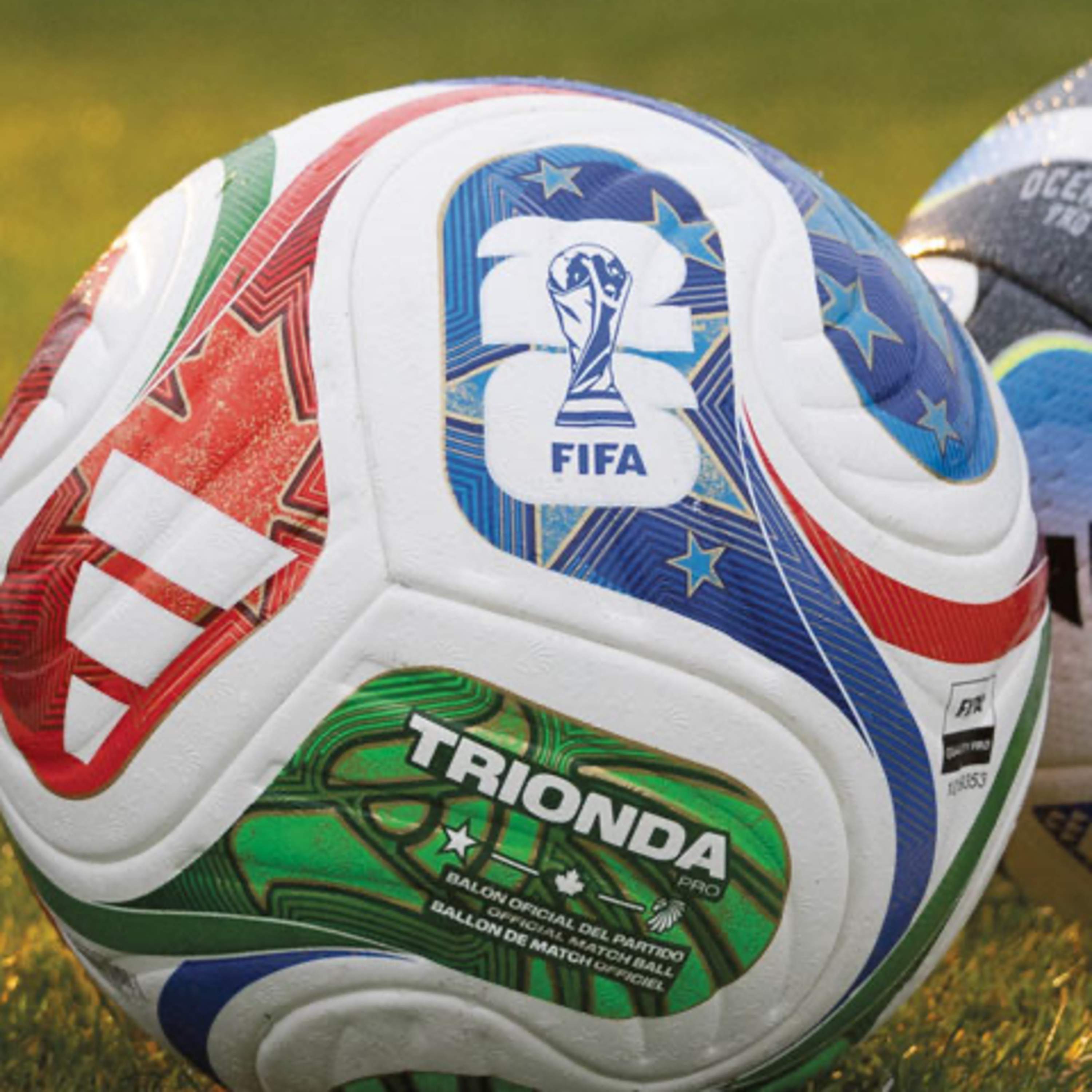
Balls in the Air
The FIFA World Cup kicks off today in North America, as qualifying teams compete for the sport's most coveted prize: The World Cup trophy. Not to be over looked, the commemorative ball is more than eye-catching visual de
Hosted by American Scientist Magazine · 🇺🇸 US · EN-US · 111 episodes
Established thought leaders with verified media credentials.
Periodic audiocasts from American Scientist, a publication of Sigma Xi, The Scientific Honor Society.
American Scientist Magazine hosts American Scientist Podcast, a education show with 111 episodes published.

The FIFA World Cup kicks off today in North America, as qualifying teams compete for the sport's most coveted prize: The World Cup trophy. Not to be over looked, the commemorative ball is more than eye-catching visual de
Today, we’re joined by Dr. Cecilie S. Traberg. The transcript for this episode will be available the day following the original airdate. Links/Sources mentioned : Dr. Traberg’s website: https://www.cecilietraberg.com/ So

Today, we’ll hear from Dr. Dan Willingham, a Professor of Psychology at the University of Virginia. He’s taught there since 1992, and until about 2000, studied the neural basis of learning and memory. But today, all of h

In this episode, we're talking about how we consume, process, and share information—and how all of this is changing as our relationships with technology evolve. Jason Lodge is the Director of the Learning, Instruction, a

Emma Levine and Shereen Chaudhry join this episode of Wired for This. Transcript Links/Sources mentioned : HOPE LAB , led by Dr. Levine and Dr. Chaudhry with Dr. Erika Kirgios and Dr. Jane Risen Some relevant HOPE LAB re

What does it take to change a mind? In episode two of Wired for This , we’ll hear from Dr. Katy Milkman, James G. Dinan Professor at The Wharton School of the University of Pennsylvania and host of the behavioral economi

Welcome to Wired for This—a deep dive into how we think , believe , change , and connect . In this limited series, we’ll explore the psychology of human behavior and neuroscience—what drives us forward, what holds us bac

The American Scientist Podcast presents a new audio series, Wired for This , premiering on September 10, 2025. Wired for This offers an in-depth look at how we think, believe, change, and connect. In this bi-weekly limit

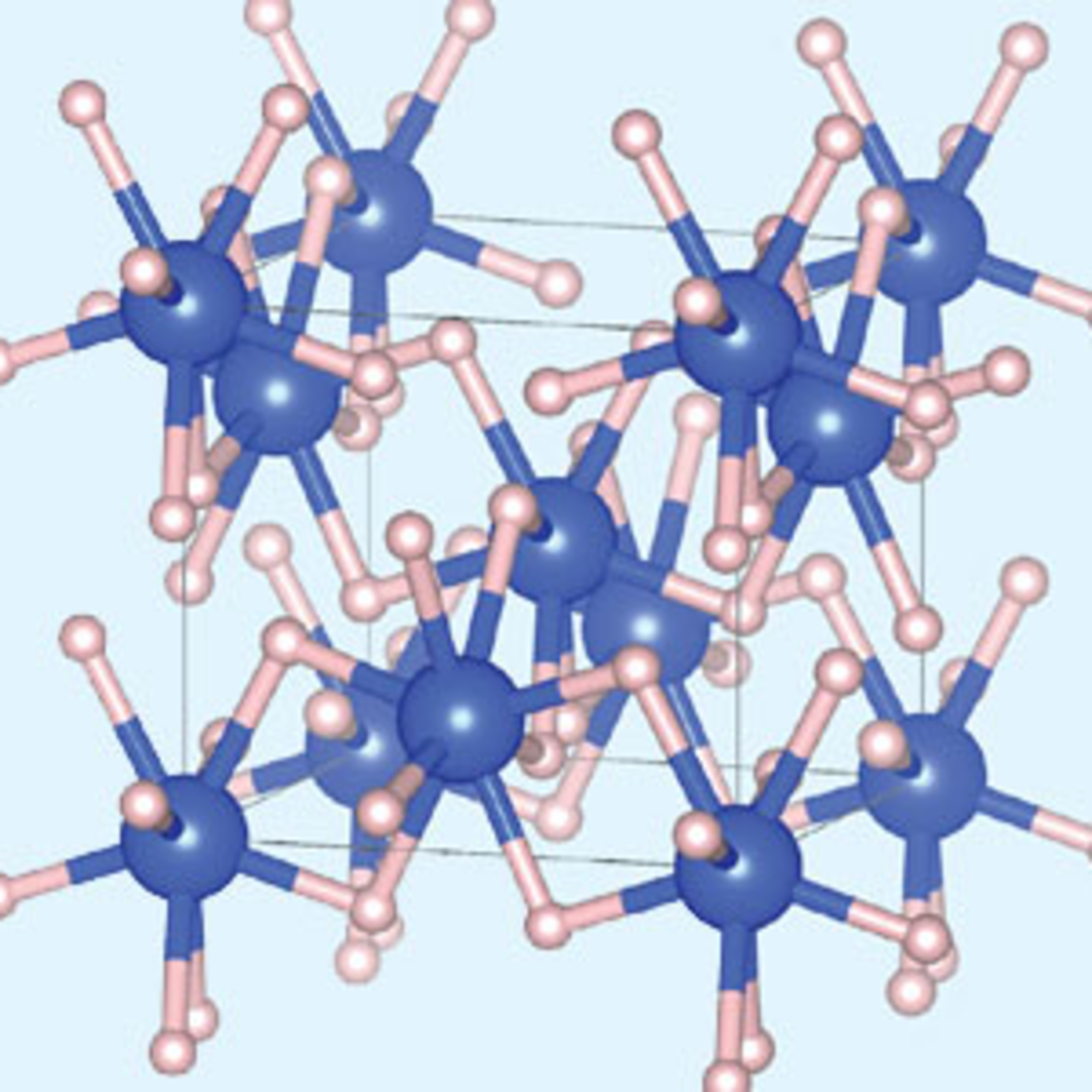
Chris Pickard is a materials scientist who employs what are called first principles methods—modeling techniques that work out material properties using fundamental rules such as quantum mechanics and Newton’s laws. Train

An interview with the president and founder of African Gong, Elizabeth Rasekoala. Her current book "Race and Sociocultaral Inclusion in Science Communication" brings together perspectives from science communicators from

An interview with Virginia Tech environmental engineer, Linsey Marr. Her expertise in aerosols came to center stage as she and her colleagues worked for years to change policies based on faulty ideas about the transmissi

We'll hear from science communication leaders and podcasters on why podcasting is an important platform for Science. Interviews from Samir Honwad—professor at the University of Buffalo, Wendy Zuckerman—host of Science VS

Andrea "Annie" Kritcher discusses her and her team's achieved ignition, raising new hopes for fusion as a practical energy source. Host Corey S. Powell and American Scientist Magazine.

Cecilia Padilla-Iglesias is melding enviromental data and how these early populations interacted. Host Corey S. Powell and American Scientist Magazine.

The collision of the Great Resignation and long-standing gender inequities in medicine is heightening calls for improved family leave policies at American health care institutions. Host Jordan Anderson and American Scien

On using synthetic biology to create next-generation diagnostics and therapeutics -- an interview with James J. Collins of Harvard and MIT, one of founders of the field.

How science fiction promotes science curiosity and why that matters. Hear from science communication practitioners and scholars Reyhaneh Maktoufi, Thomas DeFrantz, and Stephanie Castillo.

The first images from the James Webb Space Telescope (JWST) are already transforming our view of the universe. Hear from John Mather, Nobel Laureate and senior project scientist for JWST at NASA.

There are many ways organisms adapt to their environments, which can be seen both with the eye and in an organism's genetic sequence.

Researchers are working to understand the cellular composition and diversity of the brain, creating a catalog of cell types as well as seeking to plot the relationships, structures, and functions of those cell types.
Sponsor detection runs nightly. Check back soon.
No public pitch examples yet for this show.
Generate your own personalised pitchBased on semantic analysis of episode topics and host coverage, this show is a strong guest fit for executives in:
Industry fit is computed by PitchCentric using vector embeddings of the show's episode catalog.
Shows with the most semantically similar episode content. Pitch one, pitch all; producers cluster.


American Scientist Podcast has a verified contact on file. Create a free PitchCentric account to access it and generate a personalised pitch in seconds. Research at least 3 recent episodes first and lead with a specific angle that serves their education audience.
American Scientist Podcast is hosted by American Scientist Magazine. The show is categorised under education and has published 111 episodes.
American Scientist Podcast has published 111 episodes.
American Scientist Podcast regularly covers education. It sits in the education category.
American Scientist Podcast is accessible for guests with genuine education expertise. A personalised, episode-aware pitch will still outperform a generic one every time.
American Scientist Podcast hasn't explicitly signalled guest openness in recent episodes. That doesn't rule out pitching. your hook just needs to be especially compelling and relevant to their recent content.
Episodes of American Scientist Podcast average 30 minutes. a focused format where a clear narrative arc and tight preparation matter most.
Our data rates American Scientist Podcast's guest bar at 80/100 (Premium tier). Established thought leaders with verified media credentials. Sign in to PitchCentric to see how your own Pod Score compares against this show.
Methodology. Booking Probability™ blends Listen Score, 30-day Virality, open-to-guests detection, and Apple ratings. Data refreshed every 60 minutes. Listen Score and Booking Probability are calculated by PitchCentric. Last enriched 11 days ago.